By Dan Mughogho | October 12, 2026
Flash floods have swept through parts of central Nepal, destroying homes, damaging bridges and disrupting infrastructure along the Budhi Gandaki River. At least five people remain missing, while rescue teams continue searching affected communities in Gorkha district.
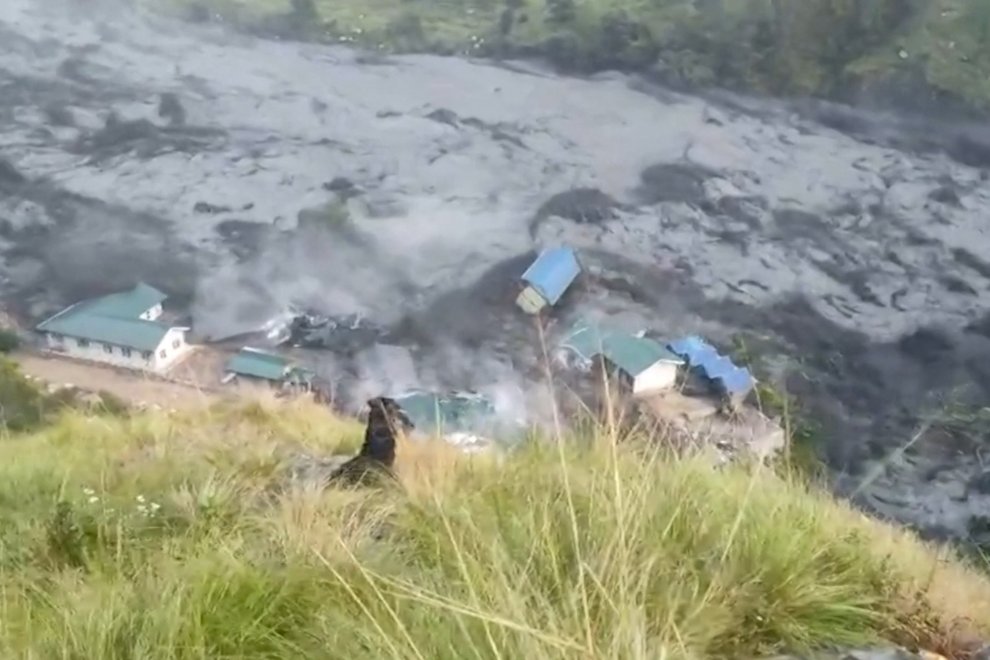
The latest disaster struck on Sunday, October 11, after a landslide apparently blocked the river and created a temporary natural dam. When the blockage gave way, a sudden surge of water, mud and debris rushed downstream, damaging settlements and infrastructure.
Authorities have mobilised security personnel, helicopters and ground rescue teams. By Monday, October 12, officials reported that 321 people, including 12 foreign nationals, had been rescued. More than 100 foreign trekkers were also reported stranded at different locations because floodwaters had damaged trails and bridges.
No deaths had been confirmed in the latest flooding in the reports available on Monday, although the five missing villagers remained unaccounted for. The scale of the destruction was still being assessed.
Nepal Floods Cause Severe Damage in Gorkha District
The flooding affected communities along the Budhi Gandaki River in Gorkha district, approximately 100 kilometres west of Kathmandu.
Areas in Chumnubri and Dharche rural municipalities experienced significant damage. Reports from local authorities and news agencies described houses being swept away, bridges destroyed and power infrastructure damaged.
Several bridges that connected communities across the river were lost or damaged, making movement difficult for residents and rescue teams. A highway bridge linking Gorkha and neighbouring Dhading district was also swept away.
The flood damaged facilities associated with hydropower projects under construction, while electric poles and communication infrastructure were affected in several locations.
Because some villages are located in remote mountainous terrain, damaged roads and trails have complicated access for emergency workers. Officials have continued assessing the affected areas as rescue and relief operations progress.
Five People Missing as Search Operations Continue
At least five villagers, reported to include two women and three men, were still missing after the flood. Rescue teams have been searching affected areas while authorities work to establish the full extent of the damage.
The Nepalese Army and other emergency personnel have been deployed to support rescue operations. Helicopters have also been used to monitor affected areas and help reach locations that are difficult to access by road.
The rescue effort has two main priorities: locating missing residents and moving people away from areas that could face further flooding.
Officials have urged people living downstream along the Budhi Gandaki River and other potentially affected waterways to move to safer locations and follow instructions issued by local authorities.
The situation has also affected trekkers in the Manaslu Conservation Area. Some visitors have been unable to return because parts of the trekking route were washed away. Authorities and local officials have been working to identify safe options for people who need assistance.
How the Budhi Gandaki River Flood Developed
Authorities believe the flood was triggered by a landslide that temporarily obstructed the Budhi Gandaki River.
When a large amount of earth and debris blocks a river, water can accumulate behind the obstruction and form a temporary natural dam. If that barrier suddenly collapses, the stored water can rush downstream with destructive force.
Preliminary information about the Gorkha disaster points to this type of landslide-dam outburst flood. However, the precise circumstances and extent of the blockage require further assessment.
The river’s water level rose rapidly during the incident. An early situation report recorded a level of approximately 8.43 metres at Arughat, above the reported danger level at that measuring point. The figures illustrate the speed and severity of the surge, although water levels and conditions can differ from one location to another. <Cite refs={[“turn288505search7″,”turn109091view0”]} />
The sudden release of water and debris can destroy buildings, bridges and riverside infrastructure before people have enough time to respond. This is particularly dangerous in narrow Himalayan valleys, where communities and transport routes often lie close to rivers.
Foreign Trekkers Stranded After Trails and Bridges Are Damaged
The floods have disrupted trekking routes in the Manaslu region, a popular destination for visitors exploring Nepal’s Himalayan landscapes.
More than 100 foreign trekkers were reported stranded at different locations on Monday because sections of trails and bridges had been swept away. Authorities said 12 foreign nationals were among the 321 people rescued that day.
The disruption does not necessarily mean every trekker is in immediate danger. Some may be waiting for assistance, while others may be able to continue or return using routes confirmed to be safe by local officials.
People travelling in the affected area have been advised to follow guidance from rescue teams and local authorities rather than attempt to cross damaged bridges or unstable sections of trail.
The incident highlights how a natural disaster can affect both local communities and visitors, especially when a single river crossing or trail provides an essential connection between settlements.
Nepal Faces Another Flood Emergency After August’s Disaster
The latest flooding comes as Nepal continues to recover from a catastrophic flood in August.
That earlier disaster, linked to a glacier collapse in a neighbouring river catchment, killed 1,457 people, according to figures cited by Reuters, while thousands were reported missing. The latest event has renewed concern about the exposure of Himalayan communities to sudden floods and other cascading hazards. <Cite refs={[“turn109091view0″,”turn288505search0”]} />
Although the two events had different reported triggers, both demonstrate how quickly dangerous water surges can affect settlements in mountainous areas.
Landslides can obstruct rivers, while glacier-related events can release large volumes of water and debris. Heavy rainfall, unstable slopes and the geography of narrow valleys can further complicate the risks.
The International Centre for Integrated Mountain Development has stressed the importance of understanding what triggered the latest flood to help reduce future risks and improve resilience in vulnerable mountain communities. <Cite refs={[“turn109091view0”]} />
Children and Families Face Displacement and Uncertainty
For families whose homes have been damaged or destroyed, the immediate challenge is finding safe shelter and obtaining essential supplies.
Floods can also interrupt electricity, communications, education and access to healthcare. When bridges and roads are damaged, delivering food, medicine and other emergency assistance becomes more difficult.
Children are particularly vulnerable when families are displaced or communities lose access to schools and familiar support networks. The renewed disaster is also unfolding during the Dashain holiday period, an important time for families across Nepal.
Save the Children Nepal said it had mobilised an emergency team. The organisation warned that children affected by the latest flooding may have lost homes, schools and community connections, while some were still recovering emotionally from previous flooding.
The full humanitarian impact will become clearer as emergency teams reach more settlements and assess families’ needs.
Authorities Urge Residents to Move to Safer Areas
Officials have urged people living along vulnerable stretches of the Budhi Gandaki River to evacuate when instructed and remain alert to further hazards.
Residents should avoid riverbanks, flooded roads, damaged bridges and areas below unstable slopes. Water levels can change quickly, and a river that appears to have receded may still pose risks if debris blocks the channel upstream.
People in affected areas should follow official evacuation instructions and rely on verified updates from local authorities and emergency services. Those assisting relatives or neighbours should avoid entering floodwater or attempting dangerous river crossings.
Rescue teams are continuing to assess access routes, search for missing residents and deliver help to affected communities.
Key Facts About the Nepal Flash Floods
- Location: Gorkha district, central Nepal, along the Budhi Gandaki River.
- Date: Sunday, October 11, 2026.
- Missing people: At least five villagers remained unaccounted for in reports published on Monday.
- Rescue operations: Authorities reported 321 people rescued on Monday, including 12 foreign nationals.
- Trekkers affected: More than 100 foreign trekkers were reported stranded at different locations.
- Main damage: Homes, bridges, trails, power infrastructure and hydropower project facilities.
- Suspected trigger: A landslide blocked the river before the temporary obstruction gave way.
- Confirmed deaths: No fatalities had been reported in the latest flood as of the cited Monday updates.
Damage estimates and rescue figures may change as authorities obtain more information from remote communities.
Frequently Asked Questions
Q1. Where did the Nepal flash floods occur?
The floods affected areas along the Budhi Gandaki River in Gorkha district, particularly parts of Chumnubri and Dharche in central Nepal.
Q2. How many people are missing after the Nepal floods?
At least five villagers were reported missing following the October 11 flooding. Search and rescue operations continued on October 12.
Q3. What caused the Budhi Gandaki River flood?
Preliminary reports indicate that a landslide blocked the river, forming a temporary natural dam. The barrier apparently gave way and released a sudden surge of water and debris. The precise circumstances remain subject to assessment.
Q4. How many people have been rescued?
Reuters reported that authorities rescued 321 people on Monday, October 12, including 12 foreign nationals. Rescue figures may change as operations continue.
Q5. Were homes and bridges destroyed?
Yes. Reports described homes being swept away, several bridges being destroyed or damaged, and disruption to roads, electricity and communications. The full extent of the damage was still being assessed.
Q6. Are trekkers affected by the flooding?
Yes. More than 100 foreign trekkers were reported stranded at different locations because floodwaters damaged trails and bridges in the Manaslu region. Travellers should follow local safety instructions and use only routes confirmed to be safe.
Q7. Is the latest flood connected to Nepal’s August disaster?
The latest flood and the August disaster affected the wider Himalayan river system, but their reported triggers differed. The August disaster was linked to a glacier collapse, while the current flood is suspected to have resulted from a landslide blocking the Budhi Gandaki River.
Chile Declares Disaster Zone After Floods and Mudslides
Bangkok Floods: All 50 Districts Declared Disaster Areas
Flood Alert: Emergency Teams Respond to Heavy Rains in Nairobi
Rescue Efforts Continue After Deadly Floods in Nigeria
Conclusion
The Budhi Gandaki River floods have caused serious damage across parts of Nepal’s Gorkha district, leaving at least five people missing and disrupting transport, power infrastructure and trekking routes. Rescue teams are continuing their search and assisting people affected by the disaster.
As assessments continue, authorities face the urgent task of locating missing residents, supporting displaced families and ensuring that people in vulnerable riverside communities can reach safer ground.
For more international news and disaster updates, visit Newsaih.
Contact: Info@newsaih.com