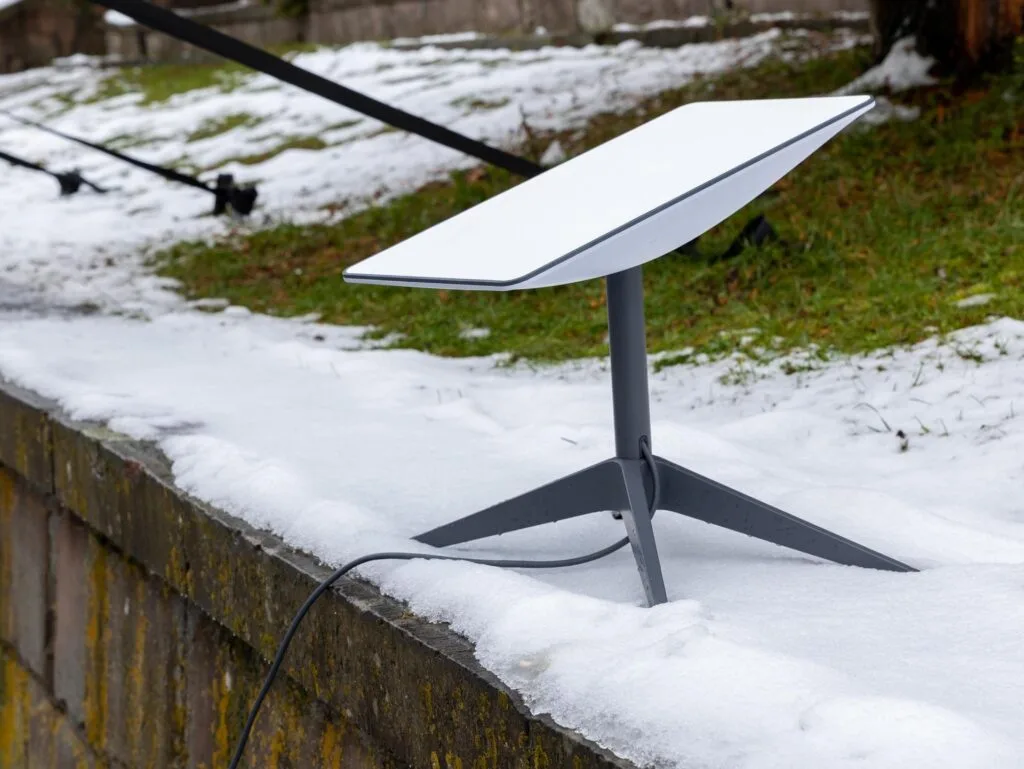
Venezuela has formally licensed Starlink, the satellite internet service of the US company SpaceX. The national telecoms regulator, Conatel, granted the licences to a local SpaceX unit this week. The Venezuela Starlink licence matters to Americans because it opens a US-built network in a country long at odds with Washington.
Conatel said its board approved general authorisation HGTS-00639 and seven general concessions in the Ku radio band on Thursday 8 October. The holder is SpaceX VZ, S.C.A., a company registered in Venezuela. The regulator announced the decision on Friday 9 October.
“With this measure, the provision of Starlink-brand satellite internet service is legally authorised throughout the national territory,” Conatel said. It added that this allows “formal operation with domicile and oversight in the country.”
Conatel credited the move to Delcy Rodríguez, who heads the interim government after the fall of former president Nicolás Maduro. Its release said the step aims to “democratise access to technology” and guarantee the right to communication.
How the Earthquakes Opened the Door
The licence grew out of a disaster. On the evening of Wednesday 24 June, two powerful earthquakes struck within about a minute of each other near the Caribbean coast.
The US Geological Survey measured the first at magnitude 7.2, centred near San Felipe in Yaracuy state. The second, at magnitude 7.5, struck about 20 kilometres west of Catia La Mar in La Guaira state. Both drew the agency’s red alert for expected losses.
According to Conatel, the double earthquake badly damaged land-based phone and internet networks in La Guaira, the state hit hardest. In response, the regulator gave the company temporary permits to test new equipment.
Those tests, Conatel said, included Direct to Device technology. It carried text messages between the country’s three mobile operators through the satellite network. Starlink also ran in the Ku band under relaxed limits on signal power, which Conatel said met “strong demand for connectivity” in the emergency zone.
Starlink distributed more than 1,600 connectivity kits to rescue teams, medical staff and aid groups, the US embassy in Caracas said in early July, as EFE reported. Digitel, a private mobile operator, said at the time it had added Starlink satellite links to strengthen its network in La Guaira.
After the emergency, Starlink held in-person and remote meetings with Conatel to learn Venezuelan law, the regulator said. It then filed a formal application.
From Feud to Licence
The approval marks a sharp turn. In late July 2024, Maduro and Musk traded public insults over Venezuela’s disputed presidential election, the Caracas outlet Efecto Cocuyo recalled.
Musk called Maduro a dictator on X, the social network he owns. Maduro named him “our new archenemy” and challenged him to a fight. Musk accepted online and offered Maduro a free trip to Mars if Maduro won.
Authorities then blocked X in Venezuela. Efecto Cocuyo said the Rodríguez interim government has partly restored access this year.
Before this week, Starlink worked in a regulatory vacuum or through temporary schemes and regional roaming, the outlet reported. The new licence means a formal local presence that Venezuelan authorities can inspect.
The Venezuela Starlink deal also comes as ties with Washington warm. In July, the US embassy in Caracas publicised Starlink’s help after the quakes.
What It Means for You
For foreign businesses, aid groups and travellers, the licence opens a legal route to internet access that does not depend on local cables. That counts in a country where the June quakes showed how quickly ground networks can fail.
Efecto Cocuyo said the authorisation opens the door to formal sale of plans and legal import of equipment. No details on tariffs, start dates or distribution have been released yet.
For investors, it is a small but clear signal. The interim government is willing to license a major US technology firm under Venezuelan rules, with local registration and oversight.
The stabiliser is that the licence is formal and nationwide, not a temporary emergency permit. The risk is that rules can change, and Venezuela’s politics remain unsettled.