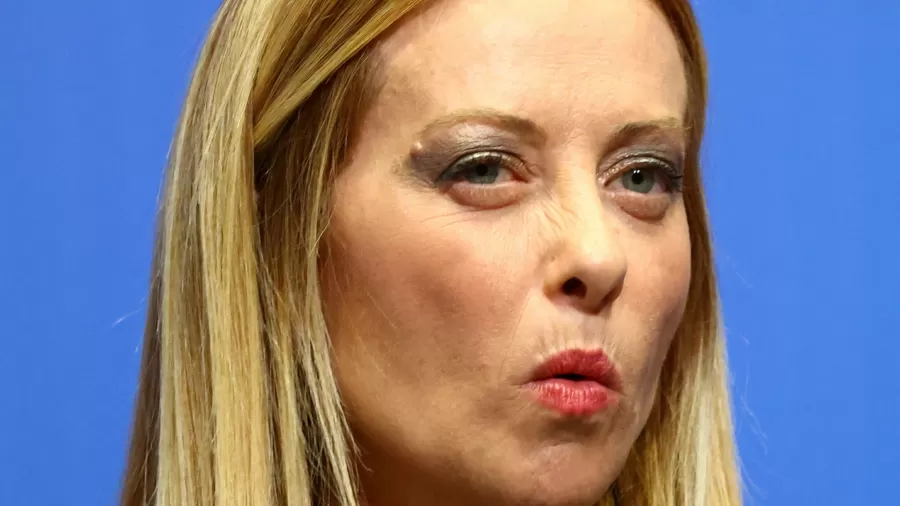
Italian Prime Minister Giorgia Meloni said on Sunday, September 20, that she will soon present her cabinet with a measure to ban the wearing of burqas and niqabs in schools, while also introducing a limit on the number of foreign students in classrooms.
Meloni announced the proposed measures at the national festival of Gioventù Nazionale (“National Youth”), the youth wing of her Brothers of Italy (FdI) party, in Rome.
Meloni Proposes Burqa and Niqab Ban in Italian Schools
Meloni specifically referred to the burqa, a garment that covers the entire body and face, and the niqab, which covers the face while leaving the eyes visible.
The proposal would target face-covering garments rather than Islamic headscarves generally. Recent reporting confirms that the proposed school restriction concerns burqas and niqabs.
Italy currently does not have a law expressly banning burqas or niqabs in schools or public places. A 1975 law prohibits helmets or clothing that makes identification difficult without a valid justification.
In 2008, Italy’s highest administrative court clarified that full-face coverings could be worn for religious or cultural reasons, provided the face is revealed when identity verification is required.
The League party, which is part of Meloni’s governing coalition, also introduced a bill earlier this year seeking restrictions on clothing that conceals the face, with exceptions for circumstances such as sporting events or places of worship.
Italy Plans Limit on Foreign Students Per Class
Meloni also announced that the government would introduce legislation establishing a maximum number of foreign students per classroom.
She said the proposed measure would also require Italian language classes for parents of foreign students who have serious difficulties integrating into the school system.
“For us, anyone who comes to Italy and wants to build their future here must learn our language, understand our culture, and respect our rules,” Meloni said.
Italy already has rules concerning the proportion of foreign students in schools. A 30% limit has existed since 2010, although exceptions and adjustments can apply depending on students’ language proficiency and other circumstances. Meloni did not explain how the proposed measure would change the existing framework.
Foreign students currently account for about 11.6% of school enrolment across Italy, according to figures cited by recent reporting.
Proposed Measures Still Need Parliamentary Approval
The announced restrictions are proposals rather than laws currently in force.
If approved by Meloni’s Council of Ministers, the measures would still require parliamentary approval within 60 days before becoming law.
The proposals place religious dress, immigration, language learning and integration at the centre of a new debate over Italy’s schools and education system.
Contact Details
Newsaih Communication Team
For news tips, story submissions, media enquiries and general questions, contact the Newsaih team.
Main: (650) 123-2558
Fax: (650) 123-0247
Address: 123 California St., Doargo
More Articles
Malawi Deputy IG Rescues British National
Health Concerns After BRICS Summit