By Dan Mughogho | Published October 10, 2026 | Updated October 12, 2026
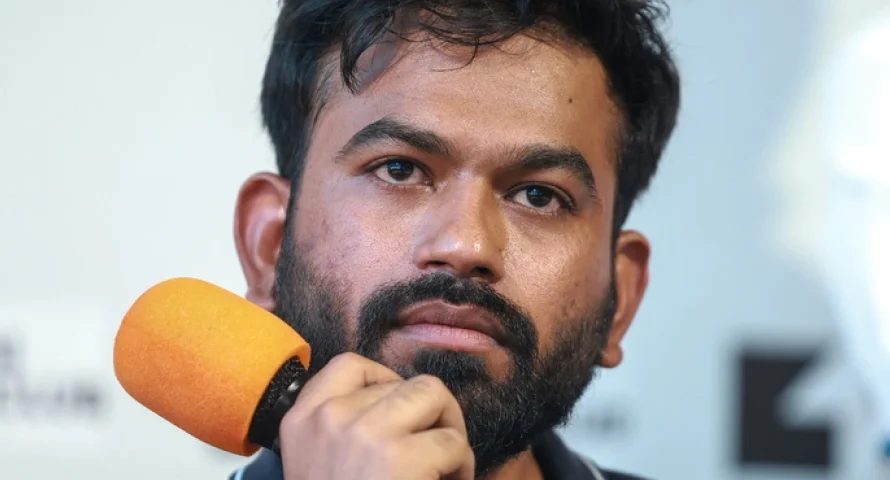
Indian authorities detained Abhijeet Dipke, founder of the youth-led Cockroach Janta Party (CJP), and two other party leaders ahead of a planned protest demanding the resignation of Chief Election Commissioner Gyanesh Kumar. The detentions on October 10 came as Delhi Police imposed extensive security restrictions to prevent a large demonstration over the removal of millions of names from India’s voter lists.
The controversy has intensified political tensions in the country, with opposition groups and youth activists questioning the transparency of the electoral roll revision. Critics argue that the removal of approximately 130 million names from the draft voter lists could affect eligible voters and potentially benefit Prime Minister Narendra Modi’s Bharatiya Janata Party (BJP). The Election Commission and the BJP have rejected allegations of political favouritism.
The protests also drew attention to the authorities’ handling of public demonstrations. Police restricted access to parts of central New Delhi, suspended mobile internet services in affected areas and shut transport facilities as security personnel moved to prevent the planned gathering at Jantar Mantar.
The situation developed further over the following days. Reporting on October 11 said a court had ordered the release of Dipke and the two other detained leaders, subject to an undertaking to maintain public peace. On October 12, opposition politicians and demonstrators continued pressing their demands, with a march towards the Supreme Court adding a new chapter to the dispute.
Why Was Cockroach Janta Party Founder Abhijeet Dipke Detained?
Abhijeet Dipke was detained at Indira Gandhi International Airport in New Delhi on October 10 after arriving from Mumbai. The Cockroach Janta Party said that two other leaders, Saurav Das and Ashutosh Ranka, were also detained shortly after their flight landed.
The three had travelled to the capital ahead of a planned demonstration demanding Gyanesh Kumar’s resignation over the controversial revision of voter lists.
The protest was intended to bring together young people and other demonstrators concerned about the removal of voter names. Authorities had prohibited the planned rally at Jantar Mantar, a location long associated with demonstrations in the capital.
According to reports, police approached the leaders after their aircraft landed and took them into custody before the planned protest could proceed as organisers had intended. The party criticised the action and portrayed it as an attempt to prevent its leaders from mobilising supporters.
The detentions became a central issue in the wider protest, shifting attention from the voter-list controversy alone to the government’s response to public dissent.
Dipke had indicated before travelling that he expected authorities might detain him. His public comments challenged the decision to restrict transport and communications and questioned why the authorities appeared so concerned about the planned demonstration.
The detention of the three leaders did not end the movement’s campaign. Supporters continued to gather and demand action over the electoral roll revisions, while the authorities maintained that their restrictions were intended to prevent disruption and maintain public order.
earlier protests demanding Gyanesh Kumar’s resignation
Cockroach Janta Party Leaders Released After Court Order
The detention of Dipke, Das and Ranka was followed by a legal development on October 11.
According to reports, a court ordered the release of the three leaders after they had been detained ahead of the rally. The Cockroach Janta Party said their release was subject to an undertaking to maintain public peace.
Their release was an important development, but it did not resolve the dispute over the voter-list revisions or the right to hold demonstrations in the capital.
The party continued to challenge the restrictions and signalled that its campaign would go on. Its public messaging emphasised that detaining individual organisers would not necessarily stop a movement whose supporters were concerned about electoral participation.
The protests also continued beyond the initial detention operation. On October 11, police detained additional demonstrators as gatherings and calls for the election chief’s resignation continued. On October 12, opposition parties and other protesters moved towards the Supreme Court, seeking to draw attention to the controversy and the restrictions imposed on demonstrations.
The sequence of events shows how the dispute has expanded from a planned youth rally into a broader debate about voting rights, electoral transparency, policing and the management of public protests.
latest international and political news
What Is the Cockroach Janta Party?
The Cockroach Janta Party is a youth-led political movement associated with Abhijeet Dipke. Its name emerged from a political controversy involving the use of the term “cockroach” to describe unemployed young people, a remark that became a rallying point for the movement.
The group has sought to channel youth frustration into public demonstrations and political demands. Its activities have included protests over employment, education and accountability, and it has become involved in the current campaign against the voter-list revision.
The movement gained wider attention after earlier demonstrations in July, which the supplied reports link to pressure that led to the resignation of an education minister over allegations involving examination paper leaks.
The party’s latest campaign focuses on the Election Commission and the question of whether the revised voter lists could exclude eligible citizens. It is demanding the resignation of Chief Election Commissioner Gyanesh Kumar and greater accountability over the process.
Its supporters say electoral participation should not be undermined by administrative decisions that remove names without adequate verification or a clear route for correction. The authorities, meanwhile, maintain that revising the lists is part of an effort to improve electoral records.
The movement’s role in the protests has attracted attention because it has mobilised young people around an issue that affects the wider electorate, including voters who may not identify with a particular political party.
Why Are Protesters Demanding Gyanesh Kumar’s Resignation?
The central demand of the demonstrations is the resignation of Chief Election Commissioner Gyanesh Kumar. Protesters and opposition groups have questioned the voter-list revision and alleged that the process could disproportionately affect supporters of parties opposing the BJP.
The allegations are politically significant because electoral rolls determine who is eligible to vote. If an eligible citizen’s name is missing, that person may face difficulties participating in an election unless the record is corrected in time.
Critics argue that removing a very large number of names requires transparent procedures, reliable verification and effective opportunities for affected people to appeal. They have also questioned whether the process could create an uneven political impact.
The BJP and the Election Commission deny the allegations of political bias. The commission has said the deletions include people who have moved, individuals who could not be traced and people who have died. It has also indicated that the revision process is not complete and that eligible voters whose names were wrongly removed can seek re-enrolment.
Those explanations form an important part of the dispute. A voter-list revision may be intended to remove duplicate, outdated or ineligible entries, but the process must also protect eligible voters from being wrongly excluded.
The political disagreement therefore involves two related questions: whether the revised lists accurately reflect eligible voters, and whether the process has been conducted in a way that citizens can independently scrutinise.
The demand for Kumar’s resignation reflects the protesters’ loss of confidence in the process. However, the allegations of partisan manipulation remain contested and should not be treated as established findings simply because demonstrations have taken place.
What Do the Figures on Voter-List Deletions Show?
The controversy centres on the reported removal of approximately 130 million names from draft voter lists. That figure has become a major focus of political debate because of the potential implications for electoral participation.
Figures cited by the Election Commission include approximately 63 million people who had relocated, 30 million people who could not be traced and 28 million people who were recorded as deceased.
The commission has argued that these categories help explain the changes to the lists. It has also said that the exercise remains incomplete and that people who have been wrongly excluded can apply to have their names restored.
Critics, however, argue that the scale of the revision requires stronger public scrutiny. They are concerned that eligible voters could be removed through errors, outdated records or verification problems. They also want clearer information about how names are checked and what evidence is required to restore an entry.
The distinction between a draft list and a final electoral roll is important. A name missing from a draft list does not automatically establish that the person has permanently lost the right to vote. The practical impact depends on the applicable process, deadlines and whether the affected person can complete the required steps to correct the record.
At the same time, a correction process is only useful if eligible voters know about it, can access it and have enough time to complete it.
The central question is not simply how many entries were removed. It is whether the process can demonstrate that the deletions are justified, that eligible voters have been protected and that mistakes can be corrected before an election.
Delhi Tightens Security Ahead of the Youth Rally
Delhi authorities deployed a substantial security presence ahead of the planned protest. Reports said thousands of police and paramilitary personnel were positioned across the capital as officials attempted to prevent a large gathering.
The measures affected daily life in parts of the city. Several metro stations and markets were closed, mobile internet services were suspended in affected areas, and train services faced cancellations or restrictions.
Security personnel checked vehicles and transport routes as authorities sought to prevent protesters from reaching the prohibited gathering. The measures created disruption for commuters, residents and businesses, particularly in and around central New Delhi.
The scale of the restrictions prompted questions about proportionality. Protest organisers argued that the shutdowns were excessive and made it harder for people to assemble or communicate. Authorities described the measures as temporary and precautionary, citing concerns about public order and the planned demonstration.
The police also defended their decision to deny permission for the rally, saying organisers had provided notice at short notice and had not followed directions during an earlier protest.
These competing explanations are important to understanding the dispute. Authorities have responsibilities to maintain public safety, but restrictions on movement, communications and peaceful assembly can have wider consequences for people who are not participating in the demonstration.
The question facing Delhi is how to manage a politically sensitive protest without imposing unnecessary disruption on the wider public.
Supreme Court Raises Questions About Transport Restrictions
The security measures also drew judicial scrutiny. Reports said India’s Supreme Court questioned restrictions affecting public transport and indicated that some trains should continue operating rather than being stopped under a blanket closure.
The intervention highlighted the tension between public-order planning and access to essential services. Metro networks and railway services are used by workers, students, patients and other residents who may have no involvement in a protest.
A broad closure can affect far more people than those the restrictions are intended to control. It can also create difficulties for people travelling to work, accessing healthcare or reaching important appointments.
The judicial questions did not, by themselves, settle the wider political dispute over the voter lists. They did, however, bring attention to the need for security measures to be proportionate and carefully targeted.
As the protests continued, the debate extended beyond whether the rally should be permitted. It also concerned how authorities should respond to public demonstrations while preserving access to transport and other essential services.
How Many Protesters Were Detained?
The number of people detained became another point of disagreement.
Reuters reporting on October 10 cited a police source who said approximately 200 protesters had been detained in central New Delhi. Broader reporting described more than 2,000 detentions connected to the security operation and protests. The Cockroach Janta Party, meanwhile, claimed that at least 10,000 people had been detained across the country.
These figures refer to different reported scopes and should not be treated as interchangeable. The larger nationwide figure was a claim by the movement, while the smaller numbers were reported in connection with specific locations or broader operations.
Authorities also reported detentions beyond the main protest area. Popular YouTuber Dhruv Rathee was reported to have been detained outside Delhi, although the circumstances and legal status of individual detainees need to be distinguished from the situation involving the three CJP leaders.
Detention figures can change quickly during a developing protest, particularly when people are taken into custody for preventive reasons and later released. A precise total requires clear information about the locations, time periods and categories of detention being counted.
The reported scale of the operation nevertheless illustrates the intensity of the authorities’ response and the extent to which the protest has become a national political issue.
BJP and Election Commission Reject Allegations of Bias
The BJP has rejected claims that the voter-list revision was designed to benefit the ruling party. It has accused opposition politicians of using the Election Commission controversy to create disorder and undermine confidence in electoral institutions.
The Election Commission has also denied allegations of political favouritism. Its explanation is that the revision is intended to update voter records and remove entries that no longer meet the relevant criteria, including records of deceased or relocated individuals.
Those responses contrast with the position of the protesters, who argue that the process risks excluding eligible voters and requires greater transparency.
The allegations should be assessed through evidence, including the criteria used to remove names, records of verification, procedures for appeals and the treatment of affected voters across different areas. Political accusations alone cannot establish whether the process was deliberately biased.
Likewise, the existence of an official explanation does not eliminate the need for independent scrutiny where the changes affect a large number of citizens.
A credible process must provide clear information about why names are removed, allow people to check their status and offer an accessible method for correcting mistakes. Public confidence depends not only on the purpose of a revision but also on how it is carried out.
The dispute is likely to continue while protesters seek accountability and election authorities defend the process.
Why the Controversy Matters Ahead of Upcoming Elections
The timing of the protests has increased their political importance. India is approaching key state elections, and disputes over voter registration can influence public confidence in the electoral system.
Voter lists are fundamental to elections because they determine who can participate. Errors in registration can prevent eligible people from voting, while inaccurate or outdated entries can create administrative challenges for election officials.
For opposition parties, the controversy raises questions about the fairness and transparency of the electoral process. For the BJP, the allegations represent a challenge to the credibility of the institutions responsible for maintaining voter records. The Election Commission is under pressure to demonstrate that its decisions are based on consistent rules rather than political considerations.
The issue is also important beyond party competition. People who are missing from electoral rolls may have difficulty exercising a basic democratic right if their records are not corrected before the relevant deadlines.
For young voters, the debate intersects with broader concerns about employment, education and political accountability. The Cockroach Janta Party’s mobilisation demonstrates how a youth-led movement can use a specific administrative dispute to draw attention to wider questions about government responsiveness.
The next stage will depend on the transparency of the voter-list revision, the ability of affected voters to check and correct their records, and whether political leaders can address the allegations through evidence rather than escalating rhetoric.
What Happens Next?
The release of the three Cockroach Janta Party leaders did not end the demonstrations. Protests continued over the weekend, and on October 12 opposition politicians and demonstrators marched towards the Supreme Court as the dispute over the voter lists escalated.
Several developments will shape what happens next.
First, the voter-list revision. Election authorities will face continued pressure to explain the scale of deletions, clarify how entries are verified and demonstrate that eligible voters can correct mistakes.
Second, legal scrutiny. Questions about protest restrictions, transport closures and the handling of detainees may continue through legal and public channels. The court-ordered release of the CJP leaders has already become a significant part of the story.
Third, political pressure. Opposition parties and youth activists are likely to keep demanding accountability from the Election Commission. The BJP and the commission continue to reject the allegation that the revision was politically motivated.
Fourth, public access to voting records. For people concerned that their names have been removed, the practical issue is how to verify their registration and complete any required correction or re-enrolment process.
Finally, the authorities’ approach to further protests. Future restrictions will be watched closely, particularly if they affect public transport, mobile communications or people who are not participating in demonstrations.
The situation remains politically sensitive. The key test will be whether the dispute can be addressed through transparent procedures, legal scrutiny and peaceful public engagement.
Frequently Asked Questions
Who is Abhijeet Dipke?
Abhijeet Dipke is the founder of the youth-led Cockroach Janta Party. He was detained in Delhi on October 10, 2026, ahead of a planned protest demanding the resignation of Chief Election Commissioner Gyanesh Kumar.
Why was the Cockroach Janta Party protesting?
The movement was protesting against the revision of voter lists that reportedly removed approximately 130 million names from draft electoral rolls. It alleges that the process could exclude eligible voters and has demanded greater accountability from the Election Commission.
Were Abhijeet Dipke and the other CJP leaders released?
Reports on October 11 said a court ordered the release of Dipke and two other senior leaders, Saurav Das and Ashutosh Ranka, subject to an undertaking to maintain public peace.
Why were metro stations and markets closed in Delhi?
Authorities imposed restrictions ahead of the planned rally, describing them as temporary and precautionary measures intended to maintain public order. The closures and communications restrictions also prompted criticism over their impact on residents and commuters.
How many names were removed from India’s voter lists?
The controversy concerns approximately 130 million names reportedly removed from draft voter lists. The Election Commission has cited relocations, people who could not be traced and deceased individuals among the reasons for deletions. The figures and the process remain contested by critics.
Has the Election Commission admitted political bias?
No. The Election Commission has denied allegations of political favouritism and has defended the revision as an effort to update voter records. Opposition groups and protesters continue to question the process.
What happened after the initial detentions?
The three CJP leaders were ordered released, but demonstrations continued. On October 12, opposition politicians and protesters marched towards the Supreme Court as pressure over the voter-list controversy persisted.
Conclusion
The detention of Cockroach Janta Party founder Abhijeet Dipke and two other leaders has become a focal point in India’s widening dispute over voter-list revisions and the right to protest.
The controversy involves competing claims about electoral accuracy, possible voter exclusion and the responsibilities of the Election Commission. The authorities maintain that the revision is intended to clean up voter records, while protesters and opposition groups say the scale of the deletions requires greater transparency and accountability.
The security restrictions in Delhi, the subsequent release of the detained leaders and the continuing demonstrations have broadened the debate to include public order, transport access and the handling of political dissent.
The allegations of partisan manipulation remain contested. Resolving the dispute will require clear evidence, accessible procedures for correcting voter records and confidence that eligible citizens can participate in elections.
latest breaking news and updates
For more updates on political developments and international affairs, visit Newsaih World News.
Contact Newsaih: Info@newsaih.com
Editorial note: The article distinguishes between official explanations, allegations by protesters and reported developments. Detention figures vary by source and scope; claims about political bias have not been presented as established fact.