
By Dan Mughogho | Published October 14, 2026
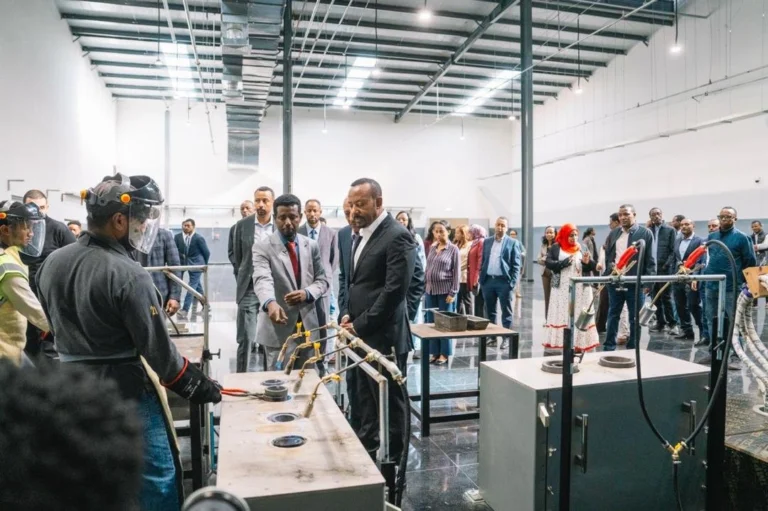
Ethiopia has commissioned its first gold refinery as the country seeks to expand its gold industry, increase export earnings and establish itself as a regional centre for precious metals processing.
Prime Minister Abiy Ahmed announced the development, describing the refinery as an opportunity for Ethiopia and neighbouring countries to process gold locally before exporting it to international markets. The facility is designed to melt, refine, cast and test gold, potentially adding value to the country’s mineral resources.
The project comes as Ethiopia looks to increase gold production and strengthen the mining sector’s contribution to its economy. Gold exports have become an important source of foreign currency for the country, while new mining projects are expected to support future production growth.
Located in the Bole Lemi industrial area southeast of Addis Ababa, the refinery represents a new step in Ethiopia’s efforts to develop its domestic mineral processing capacity.
Ethiopia’s First Gold Refinery Aims to Expand Regional Processing
The new gold refinery is intended to process gold from Ethiopia as well as supplies brought in by mining companies from neighbouring countries and other regional markets.
According to Prime Minister Abiy Ahmed, the facility will allow regional mining businesses to bring their gold to Ethiopia for refining, certification, value enhancement and sale. The goal is to reduce the need to send gold outside Africa for processing.
The initial investment in the project is expected to be approximately US$50 million. State-owned Ethiopian Investment Holdings is reported to hold the majority stake.
The refinery’s operations will cover several stages of gold processing, including melting, refining, casting and testing. These services could help mining companies access additional processing capacity within the region.
However, the refinery’s long-term contribution will depend on the amount of gold it receives, its operating capacity and its ability to attract customers from outside Ethiopia.
How Much Could Ethiopia Earn From Gold Exports?
Gold is an important source of export revenue for Ethiopia, and the government is seeking to expand the sector’s contribution to the national economy.
According to the figures cited in the original report, Ethiopia’s gold production reached approximately 3.5 tonnes in 2024, based on data attributed to CEIC. Gold exports were projected to generate around US$5.5 billion in government revenue during the 2025–2026 fiscal year.
The new refinery is expected to support this strategy by allowing more gold to be processed domestically before it enters international markets.
The report also cites an official projection of up to US$80 billion in annual export value associated with the refinery. This figure should be treated as a projection rather than confirmed revenue. Reaching such a level would require substantial gold supplies, high operating capacity and strong demand for the facility’s services.
Actual earnings will depend on production volumes, international gold prices, processing activity and the share of regional gold that Ethiopia can attract.
Tulu Kapi Gold Mine Could Support Ethiopia’s Production Growth
Ethiopia is also looking to major mining developments to increase its gold output. One project attracting attention is the Tulu Kapi gold mine in western Ethiopia, approximately 360 kilometres west of Addis Ababa.
The mine has been reported as having the potential to produce around 164,000 ounces of gold annually. At the gold price of approximately US4,179perouncecitedintheoriginalreport,thatvolumewouldrepresentagrossannualvalueofaboutUS685.3 million.
This calculation is an estimate based on the stated production target and gold price. It is not a confirmed revenue forecast, as actual proceeds would depend on production, market prices, operating costs and other commercial factors.
The original report also refers to commercial production beginning in 2027, although the timeline requires confirmation from an authoritative project update.
If the mine reaches its projected production level, it could contribute to Ethiopia’s gold supply and support the country’s wider mining ambitions. The refinery could provide additional domestic processing capacity as the industry develops.
Where Is Ethiopia’s New Gold Refinery Located?
The refinery is located in Bole Lemi, an industrial area southeast of Addis Ababa, Ethiopia’s capital.
Its location within an industrial zone could support access to infrastructure and transport connections needed for processing and handling precious metals. The facility is intended to serve both domestic gold producers and potential customers from neighbouring countries.
By processing gold within Ethiopia, the government hopes to retain more of the value generated by the mineral supply chain. Refining and certification can add commercial value beyond the extraction of raw gold, although the financial benefits will depend on the facility’s performance and customer demand.
The refinery’s regional ambitions also place it within a broader discussion about trade, investment and economic cooperation across Africa.
Global Gold Demand Creates an Opportunity for Ethiopia
Ethiopia’s investment in gold processing comes amid continued interest in gold from investors, governments and central banks.
China remains a major force in the global gold market. The original report cites production of approximately 384.3 tonnes in China in 2025, representing around 10% of global output. Australia, Russia and Canada are also among the world’s significant gold-producing countries.
Demand is influenced by several factors, including investment activity, jewellery consumption, central-bank purchases, economic uncertainty and expectations about interest rates.
The report also cites forecasts that gold prices could reach between US4,750andUS5,500 per ounce in the first quarter of 2027. These are market projections, not guaranteed prices, and actual movements may differ as economic and geopolitical conditions change.
China’s gold purchases are another factor to watch. According to the figures cited in the original report, the People’s Bank of China purchased 23 tonnes of gold in September. Central-bank buying can influence market sentiment, although it is only one of several factors affecting prices.
Developments in international relations and trade can also influence investor expectations. Readers can follow related coverage of the Trump-Xi state visit for broader context on relations between two major global economic powers.
Why Gold Matters to Central Banks and National Economies
Gold is held by central banks as part of their reserve assets. Governments and monetary authorities may use gold as a way to diversify reserves, although its market value can fluctuate significantly.
The original report cites Bundesbank President Joachim Nagel discussing the rising share of gold in global central-bank reserves at the LBMA Global Precious Metals Conference. It states that gold’s share of central-bank reserves rose from approximately 14% in 2023 to nearly 25%, with rising prices contributing to the increase.
The report also places Germany’s gold reserves at more than 3,350 tonnes. These figures should be checked against the latest official reserve data before publication.
For Ethiopia, the new refinery offers a different but related opportunity: rather than holding gold as a reserve asset, the country aims to strengthen its position in the production, processing and export of the metal.
The wider economic picture also includes trade, energy and investment conditions. Newsaih readers can explore related international coverage, including G7 diesel reserve developments and India-Switzerland relations, for additional reporting on global economic and diplomatic affairs.
What Ethiopia’s Gold Refinery Means for Africa
Ethiopia’s refinery could help address a gap in regional mineral processing by providing mining companies with another location to refine and certify gold before international sale.
If the facility attracts sufficient supplies, it could create opportunities for Ethiopia to earn income from processing services as well as gold produced within its own borders. It may also encourage further investment in mining infrastructure and related services.
However, becoming a major regional processing centre will require more than opening a refinery. Ethiopia will need reliable gold supplies, competitive services, effective quality controls and access to international buyers.
The project’s impact will become clearer as operating capacity, customer participation and export performance are reported.
For now, the commissioning of the refinery marks a significant development in Ethiopia’s effort to expand its gold industry and capture more value from its mineral resources.
Frequently Asked Questions
Has Ethiopia launched its first gold refinery?
Yes. According to the report, Ethiopia has commissioned its first gold refinery in the Bole Lemi industrial area southeast of Addis Ababa.
Where is Ethiopia’s new gold refinery located?
The refinery is located in Bole Lemi, an industrial area southeast of Addis Ababa, the Ethiopian capital.
How much does Ethiopia’s gold refinery cost?
The initial investment is reported to be approximately US$50 million, with state-owned Ethiopian Investment Holdings holding the majority stake.
What will Ethiopia’s gold refinery do?
The facility is designed to melt, refine, cast and test gold. It is intended to process gold from Ethiopia and potentially from regional mining companies.
How much gold does Ethiopia produce?
The original report cites CEIC data indicating that Ethiopia produced approximately 3.5 tonnes of gold in 2024.
How much could Ethiopia earn from gold exports?
The original report projects approximately US5.5billioningoldexportrevenueforthe2025–2026fiscalyear.Italsocitesapotentialannualexport valuefigureofUS80 billion associated with the refinery, which should be treated as a projection rather than confirmed earnings.
What is the Tulu Kapi gold mine?
Tulu Kapi is a gold mining project in western Ethiopia, approximately 360 kilometres west of Addis Ababa. The original report cites a projected annual production level of around 164,000 ounces.
When will the Tulu Kapi gold mine begin commercial production?
The original report refers to a 2027 start, but the timeline should be verified against an authoritative project update before being presented as confirmed.
Why is gold important to Ethiopia’s economy?
Gold exports generate foreign currency and can support government revenue. Expanding domestic refining could also help Ethiopia capture more value from processing and certification services.
Could Ethiopia become a major gold-processing centre in Africa?
The refinery could help Ethiopia attract regional mining companies, but its success will depend on gold supply, operating capacity, service quality, international demand and commercial competitiveness.
Conclusion
Ethiopia has commissioned its first gold refinery as it seeks to expand gold processing, increase export earnings and strengthen its role in the regional mining industry.
The approximately US$50 million project is intended to serve domestic producers and potentially attract gold from neighbouring countries. Combined with planned mining developments such as Tulu Kapi, it could support Ethiopia’s ambition to capture more value from its mineral resources.
However, the refinery’s long-term impact will depend on actual production, the volume of gold processed, customer demand and international market conditions. The reported revenue figures and production timelines should be assessed against verified operational data as it becomes available.
Newsaih will continue to follow developments in Ethiopia’s mining sector and the wider global gold market.
Contact Newsaih: Info@newsaih.com