By Dan Mughogho | Published October 14, 2026
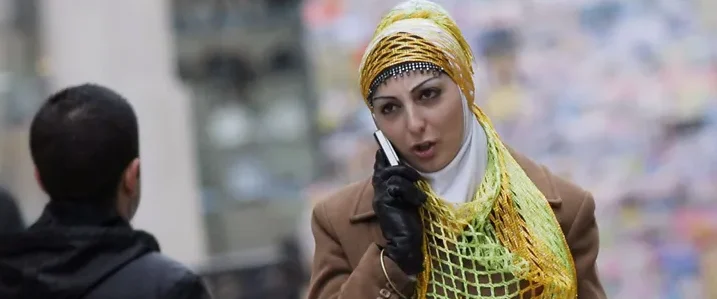
Azerbaijan is facing growing tensions over school uniform rules after reports that girls wearing hijabs were barred from classes, prompting protests in Baku and other cities. Students, teachers and supporters have raised concerns about the restrictions, arguing that religious clothing should not prevent children from receiving an education.
The controversy intensified on October 12, when Azerbaijan’s Interior Ministry announced that 37 people had been detained over alleged public-order violations. At the same time, users reported difficulties accessing TikTok and Instagram, although authorities did not confirm that the platforms had been deliberately blocked.
The dispute has renewed questions about the interpretation of Azerbaijan’s secular education policies, the rights of students and teachers, and the possible political motivations behind the reported restrictions.
Azerbaijan’s New School Uniform Rules Do Not Explicitly Mention Hijabs
Azerbaijan’s Cabinet of Ministers introduced new school uniform rules through a decree dated September 21, 2026. The decree prohibits clothing that disrupts the uniformity of prescribed school uniforms or is inconsistent with the principle of secularism in general education.
However, the decree does not explicitly mention hijabs.
School inspections reportedly began on October 9. During these inspections, girls wearing headscarves were barred from classes, while female teachers were also reportedly required to remove their headscarves, according to Jam News.
The reported enforcement has raised questions about how school authorities are interpreting the decree and whether the measures applied to students and teachers are explicitly supported by its wording.
The absence of a specific reference to hijabs has become central to the controversy, with critics questioning why religious head coverings have resulted in students being excluded from lessons.
Student Protests Spread Across Azerbaijan
Protests broke out in Baku and other Azerbaijani cities after reports emerged that schoolgirls wearing hijabs were being prevented from attending classes.
Some boys reportedly refused to attend school in solidarity with their classmates. In a village in Baku’s Sabunchu district, students displayed a sign bearing the slogan, “A hijab does not stand in the way of an education.”
The demonstrations have focused on access to education and the treatment of students whose religious clothing conflicts with the way school officials are applying the uniform rules.
The controversy has also extended to male students. A source at a Baku school told the BBC that boys in upper grades were reportedly required to shave their beards, even though beards are not mentioned in the Cabinet decree.
These reports have broadened the debate beyond headscarves, raising further questions about the scope of school dress requirements and how they are being enforced.
For related international coverage, readers can explore Newsaih’s report on student protests in France, which provides additional reporting on demonstrations involving students.
Azerbaijan Detains 37 People Over Alleged Public-Order Violations
On October 12, Azerbaijan’s Interior Ministry announced that 37 people had been detained over actions it described as gross violations of public order.
The ministry said a group of individuals had created a conflict with school staff over compliance with the uniform dress code and damaged school property. Authorities subsequently opened a criminal investigation into alleged acts disrupting public order.
The reported offence carries a possible prison sentence of up to three years. However, the ministry did not provide further details about the detainees, and it remains unclear whether any minors were among them.
Videos of the protests circulated on social media. One reportedly showed students attempting to smash school windows. The Telegram channel Minval Politika also reported that a school principal’s car had been set on fire in the Garadag district.
These reports indicate that the dispute has coincided with incidents of alleged property damage. However, the available information does not establish that every protest was associated with violence or criminal activity.
TikTok and Instagram Access Concerns During the Protests
As the protests unfolded, some Azerbaijani users reported difficulties accessing TikTok and Instagram, two of the country’s most popular social networks.
Some users said they could access the platforms only through a virtual private network, commonly known as a VPN. The reported disruption led to speculation that access restrictions might be connected to the demonstrations.
However, Azerbaijani authorities had not confirmed deliberately blocking either platform.
The reports therefore remain unverified as evidence of a government-imposed restriction. Further official information would be needed to establish the cause of the access problems and whether they were connected to the protests.
Social media has nevertheless become an important part of the controversy, as videos and accounts of events at schools have circulated online.
Azerbaijan’s History of Protests Against Hijab Restrictions
The current dispute follows earlier demonstrations against restrictions on religious dress in Azerbaijan.
Jam News reported that a similar protest took place outside the Education Ministry in May 2011 and led to a criminal investigation.
That same year, authorities detained activist Abgul Suleymanov, who was known for participating in protests against the hijab ban. He was later sentenced to 11 years in prison on charges he denied.
The earlier episode provides context for the latest controversy, showing that debates over religious clothing and state education policies have arisen in Azerbaijan before.
However, the earlier case does not by itself establish the motivations behind the current restrictions. The present dispute centres on the interpretation of the September 2026 decree and the reported exclusion of students wearing hijabs.
Why Is Azerbaijan Restricting Hijabs in Schools?
The reasons behind the current restrictions remain unclear. The BBC reported that neither the Cabinet nor the Education Ministry had explained the rationale or responded to journalists’ inquiries.
Journalist Afgan Mukhtarli, a critic of the authorities, argued that hijabs were not the underlying problem. He suggested that President Ilham Aliyev was invoking the threat of radical Islam to strengthen his political position.
Supporters of the authorities, by contrast, have framed the issue as part of an effort to strengthen national sovereignty and reduce foreign ideological influence.
It remains unclear which foreign influences supporters were referring to. The BBC reported that some observers believed Aliyev’s recent comments about ideological interference from abroad were directed at Turkiye.
These interpretations remain competing views rather than an established explanation for the policy. Without a detailed official statement, the precise reasons for the reported enforcement measures remain uncertain.
Turkiye Drawn Into Azerbaijan’s Hijab Controversy
The dispute has also attracted attention in Turkiye. On October 3, protesters gathered outside Azerbaijan’s consulate in Istanbul to demand an end to restrictions on wearing hijabs in Azerbaijani schools.
The demonstration highlights the wider interest in the issue among people concerned about religious expression and the treatment of Muslim students.
Turkiye has also featured in public discussion of the controversy because of speculation about President Aliyev’s comments on foreign ideological influence. However, the available reporting does not establish that Turkiye was officially identified as the target of those remarks.
The protest in Istanbul adds an international dimension to the dispute, but the central questions remain focused on Azerbaijan’s school uniform decree, the way it is being enforced and the effect on students and teachers.
What Happens Next in Azerbaijan’s Hijab Row?
The next stage of the controversy will depend partly on whether Azerbaijan’s authorities clarify how the school uniform decree applies to religious head coverings.
A detailed explanation from the Cabinet or Education Ministry could address questions about whether hijabs are prohibited, what authority school officials have to enforce the rules and how students’ access to education is being protected.
Further information about the 37 detentions and the criminal investigation will also be important. Meanwhile, reports of social media access problems require clarification before any deliberate government restriction can be established.
Until the authorities provide further details, the dispute is likely to remain a point of tension between supporters of strict secular school policies and those opposing restrictions on religious dress.
Frequently Asked Questions
1. Why are students protesting in Azerbaijan?
Students have protested following reports that schoolgirls wearing hijabs were barred from classes under the enforcement of new school uniform rules.
2. When did Azerbaijan introduce its new school uniform decree?
Azerbaijan’s Cabinet of Ministers introduced the decree on September 21, 2026. School inspections reportedly began on October 9.
3. Does the decree explicitly ban hijabs?
No. The reported wording prohibits clothing that disrupts school uniformity or conflicts with secular principles, but it does not explicitly mention hijabs.
4. How many people were detained during the protests?
The Interior Ministry announced on October 12 that 37 people had been detained over alleged public-order violations.
5. Were minors among the 37 detainees?
The ministry did not provide enough information to establish whether any of those detained were minors.
6. Were teachers affected by the restrictions?
Jam News reported that female teachers were also required to remove their headscarves during the enforcement of the uniform rules.
7. Why did users report problems accessing TikTok and Instagram?
Some users reported access difficulties and said they needed VPNs to reach the platforms. Authorities had not confirmed that the government deliberately blocked them.
8. Has Azerbaijan experienced hijab protests before?
Yes. Jam News reported a similar protest outside the Education Ministry in May 2011, followed by a criminal investigation.
9. Why has Turkiye become part of the debate?
Some observers have linked President Aliyev’s comments about foreign ideological influence to Turkiye. A protest was also held outside Azerbaijan’s consulate in Istanbul on October 3, demanding an end to the reported hijab restrictions.
10. Has the Azerbaijani government explained the reason for the restrictions?
According to the reporting cited, neither the Cabinet nor the Education Ministry had provided a detailed explanation of the measures or their application to hijabs.
Conclusion
Azerbaijan’s hijab row has escalated into a dispute over religious expression, secular education policies and students’ access to classrooms. Reports of school exclusions have prompted demonstrations, while the Interior Ministry’s announcement of 37 detentions has added to tensions.
The September 21 decree does not explicitly mention hijabs, and the authorities have not provided a detailed public explanation of the reported restrictions. Questions also remain about the circumstances of the detentions and reports of social media access problems.
The situation will depend in part on whether officials clarify the rules and how they are applied in schools. Newsaih will continue to follow developments in Azerbaijan and the wider debate over religious dress and education.
Contact Newsaih: Info@newsaih.com