
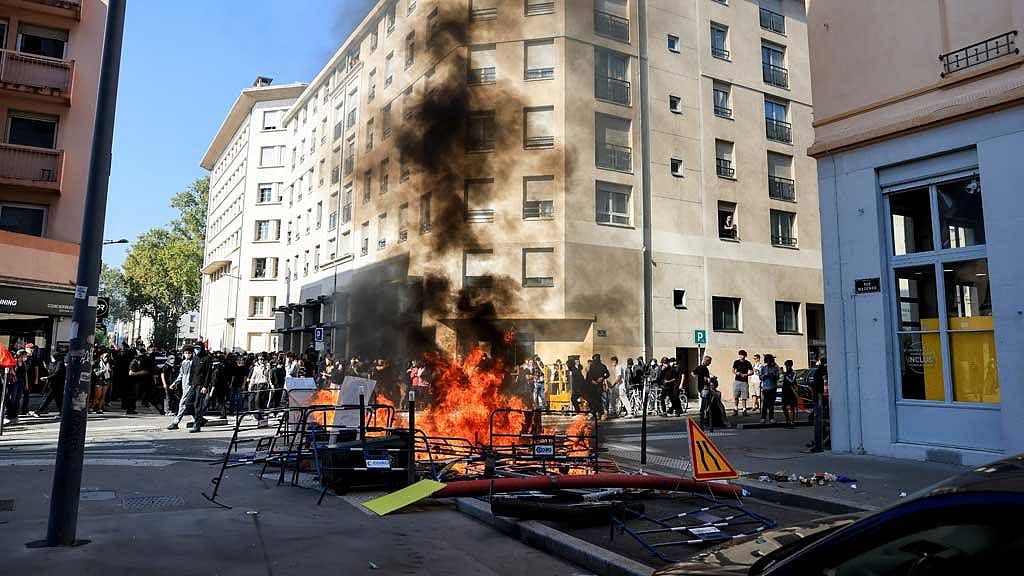
France is facing a major wave of student protests as demonstrations over school conditions, teacher shortages, overcrowded classrooms and education funding have spread across the country.
The protests, which began in the Paris region in September, have grown into a nationwide movement involving high school students, university students, parents, teachers and labor unions.
France’s Justice Ministry said 5,060 people had been arrested since the protests began, with 87% of those arrested being minors. More than 1,800 people were also being prosecuted, including 1,483 minors, according to figures reported during the protests.
The unrest has also led to serious injuries, school closures and clashes between protesters and police.
Why Are Students Protesting in France?
The student protests began over concerns about conditions in French schools.
Students and teachers have raised complaints about overcrowded classrooms, teacher shortages, deteriorating school buildings and a lack of resources.
The movement initially developed around schools in the Paris region before spreading to other parts of France.
According to Euronews, the first protests began on September 17 after students and teachers in Créteil protested for additional resources and staff. The demonstrations quickly spread after videos from the protests circulated on social media.
Students have since blocked schools and organized demonstrations in cities across the country.
The movement has attracted support from parents, teachers and labor unions, while authorities have struggled to contain the disruption.
Protests Spread Across France
Demonstrations have been reported in major cities including Paris, Marseille, Lyon, Nantes, Lille and other parts of the country.
Students have used barricades to block entrances to schools, while larger demonstrations have taken place in city centers.
A nationwide day of protest was expected to draw tens of thousands of people, with reports suggesting that around 40,000 to 50,000 demonstrators could participate in Paris.
The protests have not all been violent.
However, some demonstrations have descended into clashes between protesters and police, with schools damaged or set on fire in several locations.
French authorities said at least 24 schools had been burned or ransacked during the unrest.
[Follow the Latest France News]
More Than 5,000 People Have Been Arrested
The number of arrests has become one of the defining features of the protests.
France’s Justice Ministry reported that 5,060 people had been arrested since the movement began.
About 87% of those arrested were minors.
The ministry also reported that more than 1,800 people were being prosecuted, including 1,483 minors, although the reported figures did not specify the individual offenses in each case.
The government has faced pressure over how the police response has been handled, particularly because so many of those involved in the demonstrations are teenagers.
Rights groups and student supporters have accused police of using excessive force during some confrontations.
Authorities, however, have defended the police response and said officers are dealing with violent incidents while trying to protect public safety.
Teenager Loses Hand During Lens Protest
One of the most serious incidents occurred in the northern French city of Lens.
A 15-year-old student suffered severe injuries during clashes involving protesters and riot police and lost his hand and part of his lower arm.
Reports said the injury involved a police dispersal grenade.
The exact circumstances were being investigated, with authorities examining what happened immediately before the device exploded. Reuters reported that it had not been definitively established whether the teenager picked up the grenade or whether it was thrown at him.
The incident intensified criticism of the police response and became a major focus of national attention.
Other students have also suffered serious injuries during the protests.
According to figures reported by French authorities, at least 215 teenagers had been injured, while hundreds of police officers had also suffered injuries during clashes.
[Read More Breaking World News]
Claims of Excessive Police Force
The response by French security forces has become one of the most controversial parts of the protests.
Rights groups have accused police officers of using heavy-handed tactics against young protesters, including batons, tear gas and other crowd-control weapons.
Several incidents involving injured teenagers have led to investigations.
At the same time, French officials have rejected the suggestion that police are deliberately targeting students.
The government has argued that officers are responding to increasingly violent incidents surrounding some demonstrations.
This distinction is important because the protests include both peaceful demonstrations and incidents involving vandalism, fires, barricades and clashes.
The French government has said it must address legitimate concerns about education while also maintaining public order.
Hundreds of Schools Have Been Disrupted
The protests have had a major effect on schools across France.
Students have blocked school entrances and, in some locations, forced schools to close temporarily.
Euronews reported that hundreds of schools were fully or partially closed or disrupted as authorities assessed whether they could operate safely.
The disruption has affected students, teachers and families.
For protesters, school blockades have become a way of demonstrating the seriousness of their complaints.
For authorities, however, prolonged blockades create concerns about students’ education and the safety of staff and pupils.
The French government has therefore been under pressure to find a solution that addresses the underlying problems without allowing the protests to continue escalating.
Government Promises Action on Education
The government has acknowledged that students have legitimate concerns about school conditions.
Education Minister Édouard Geffray said the government would create a platform allowing students to express their concerns and develop an action plan for schools facing specific problems.
Officials have also pointed to measures aimed at addressing staffing shortages and other problems affecting schools.
However, student organizations have argued that promises alone are not enough.
They want concrete commitments involving school funding, teachers, infrastructure and classroom conditions.
That disagreement has helped keep the protests going.
[Stay Updated With France News]
Student Organizations Reject Government Assurances
Student organizations have continued to call for nationwide demonstrations despite government efforts to respond.
Their argument is that the problems did not begin with the latest protests and cannot be solved through short-term announcements.
Students have highlighted issues such as overcrowded classrooms, missing teachers and deteriorating buildings.
The movement has therefore developed beyond a single school or city.
It has become a broader campaign over the future of French education.
Parents and Teachers Join the Movement
The protests have also attracted people outside the student population.
Parents and teachers have joined demonstrations in several locations.
Labor unions have also supported calls for action.
The involvement of adults has given the movement greater visibility and helped transform it from a series of school blockades into a wider national political issue.
Teachers have their own concerns about staffing, working conditions and school resources.
For many parents, the protests have also raised questions about whether children are receiving adequate educational opportunities.
Political Tensions Rise Around the Protests
The protests have taken place against a tense political backdrop in France.
With a presidential election approaching, political parties have sought to respond to the growing unrest.
Government figures and right-wing politicians have accused members of the left-wing France Unbowed movement, or LFI, of encouraging or inflaming the protests.
LFI has rejected those accusations.
Reuters reported that the political dispute has intensified as the government and opposition parties argue over who is responsible for the escalation of the unrest.
Marine Le Pen and other right-wing figures have taken a hard line on violence and disorder, while Jean-Luc Mélenchon and other left-wing politicians have expressed support for students’ grievances.
These political disagreements have added another layer to an already tense situation.
Why the France Protests Matter
The protests are significant because they involve a large number of young people and address problems that affect the country’s education system.
The movement also raises broader questions about inequality, public spending and the relationship between young people and government institutions.
For students, the immediate concerns are practical.
They want schools with adequate teachers, functioning facilities and manageable class sizes.
For the government, the challenge is more complicated.
France is also dealing with pressure on public finances, making major increases in education spending difficult at a time when officials are trying to control the country’s deficit.
That financial pressure has become part of the wider political debate surrounding the demonstrations.
France Faces Pressure to Find a Solution
The government now faces two competing demands.
The first is to respond to students who say their schools are underfunded and understaffed.
The second is to restore order where demonstrations have become violent.
Those objectives are not necessarily incompatible, but finding a solution will require negotiations between the government, students, teachers, parents and other groups involved in the education system.
The continuing arrests and injuries show how quickly a dispute over education can develop into a much wider national crisis.
What Happens Next?
The future of the protests will depend partly on whether students believe the government is offering meaningful solutions.
Officials have promised new measures and discussions, but student organizations have continued to demand concrete action.
At the same time, police and prosecutors are continuing to deal with arrests and cases arising from the demonstrations.
The authorities will also face continued scrutiny over allegations of excessive force, particularly where minors have suffered serious injuries.
The government must therefore manage both the underlying education problems and the immediate security concerns.
For now, the protests remain one of France’s most important domestic stories.
FAQs About the France Student Protests
Why are students protesting in France?
Students are protesting over concerns including teacher shortages, overcrowded classrooms, deteriorating school buildings, inadequate resources and wider problems within the French education system.
How many people have been arrested in France?
France’s Justice Ministry reported 5,060 arrests since the protests began, with 87% of those arrested being minors. More than 1,800 people were being prosecuted.
How many students have been injured?
French authorities reported that 215 teenagers had been injured during the unrest by October 6, while an earlier figure from the education minister put the number of injured students at 190. The figures changed as the protests continued.
What happened to the 15-year-old in Lens?
A 15-year-old suffered catastrophic injuries and lost his hand and part of his lower arm during clashes in Lens involving a police dispersal grenade. Authorities opened an investigation into the circumstances.
Have French schools been closed?
Yes. Hundreds of schools have been disrupted or closed during the protests. Authorities have also reported that at least 24 schools were burned or ransacked.
Are the protests peaceful?
Many demonstrations have been peaceful, but some have involved clashes with police, fires, vandalism and other violence. Authorities and protesters have disputed responsibility for some incidents.
What is the French government doing?
The government has promised measures to address education concerns, including an online platform for students and school-specific action plans. Authorities are also continuing to manage arrests, prosecutions and security during demonstrations.
Are political parties involved?
Yes. The protests have become part of a wider political dispute, with government and opposition figures disagreeing over the causes of the unrest and the role of political groups. LFI has denied accusations that it is encouraging violence.
Stay Updated With Newsaih
The France student protests remain a developing story as the government faces pressure over education conditions, police conduct and the growing number of arrests.
Newsaih will continue to follow developments as authorities, student organizations, teachers and political leaders respond to the unrest.
Contact Newsaih
Have a news story or political update to share?
Phone: (650) 123-2558
(650) 123-0247 (fax)
Read our more articles
Malawi Deputy IG Rescues British National
Health Concerns After BRICS Summit
Zimbabwean Arrested Over Death Threat
Araghchi and Pezeshkian Arrive in New York
Mystery Surrounds Death of CEO Okey Ezeibe
Fresh Arrests in South Africa After Murders