Fresh controversy has emerged following the fatal road accident along the Naivasha–Nairobi Highway that claimed the life of businessman and politician Cyrus Jirongo, after a key eyewitness reportedly lost his job for speaking to the media.
The incident has ignited public anger and renewed debate about freedom of expression, worker rights, and the risks faced by ordinary Kenyans who speak out after witnessing major tragedies.
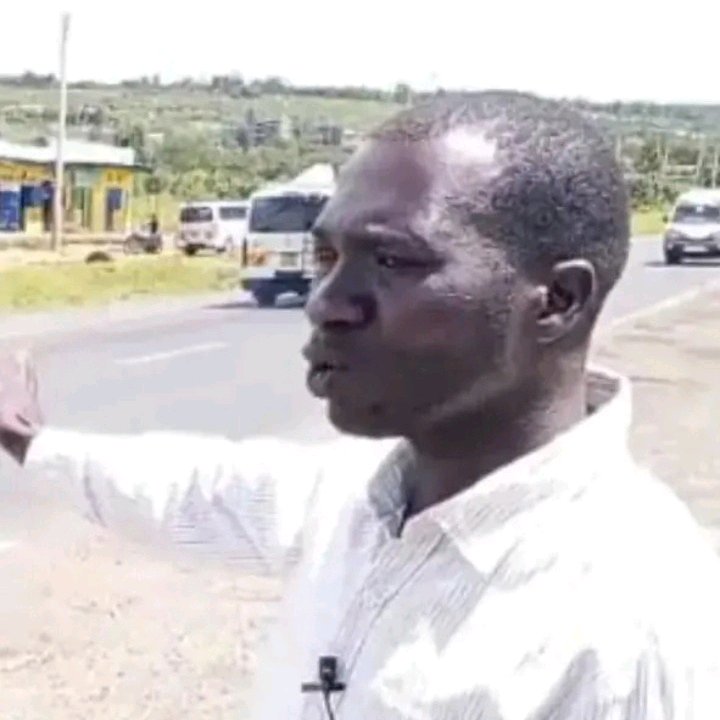
The eyewitness, identified as Ephraim Epitek, was on duty as a security guard at Eagol Petrol Station in Karai when the deadly collision occurred.
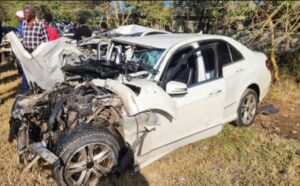
The crash, involving a Climax Coach bus and Jirongo’s private vehicle, unfolded just a short distance from where he was stationed.
In the chaotic moments that followed, Ephraim spoke to journalists, calmly describing what he saw, the impact, the confusion, and how members of the public rushed to the scene before emergency services arrived.
His account quickly spread across social media platforms, becoming one of the earliest and clearest descriptions of the tragedy.
Days after the interview circulated widely, Ephraim was allegedly dismissed by the private security company that had deployed him to the petrol station.
According to people familiar with the situation, the company accused him of addressing the media without authorisation.
The decision has drawn sharp criticism from Kenyans online, with many questioning why an eyewitness should be punished for sharing factual information about a public incident that had already attracted national attention.
Supporters argue that Ephraim did not disclose classified information nor act maliciously, but simply narrated events as they happened , a civic act that helped counter speculation and misinformation.
Despite losing his job, those close to him say Ephraim has remained resolute. He reportedly maintains that he spoke out in good faith and does not regret telling the truth, even if it came at a personal cost.
The episode has also refocused attention on the Naivasha–Nairobi Highway, a stretch long criticised for frequent and often fatal accidents. Calls are growing for improved road safety measures, clearer accident reporting protocols, and stronger protections for witnesses.
As investigations into the crash continue, Ephraim’s experience has taken on wider significance. For many Kenyans, his story represents the difficult choice between silence and honesty, and the consequences that sometimes follow those who choose to speak.