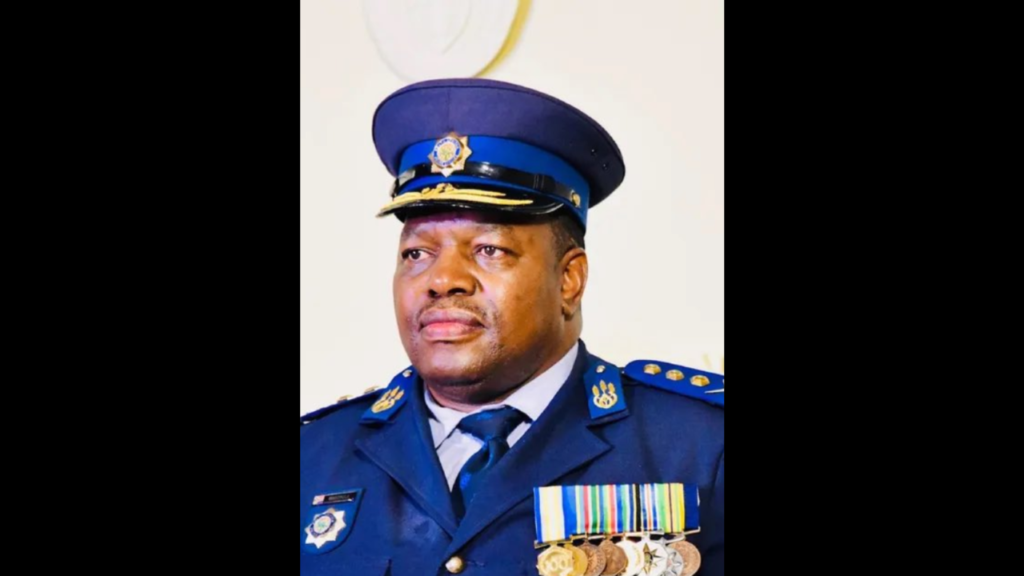
Ramaphosa Lifts Suspension of Police Chief Fannie Masemola
South African President Cyril Ramaphosa has lifted the precautionary suspension of National Police Commissioner General Fannie Masemola, allowing him to resume his duties on Monday, October 19, 2026, following the withdrawal of criminal charges against him.
The decision brings an end to Masemola’s six-month absence from the leadership of the South African Police Service (SAPS). He was suspended in April after appearing in court over allegations linked to the Public Finance Management Act (PFMA).
The charges concerned alleged failures to adequately oversee a controversial SAPS health-services contract awarded to Medicare24, a company owned by businessman Vusimuzi “Cat” Matlala.
On September 15, the National Prosecuting Authority (NPA) announced that it would withdraw the charges after reviewing the evidence and determining that there were insufficient grounds to pursue a successful prosecution. The Pretoria Magistrates’ Court formalised the withdrawal on September 22.
Presidential spokesperson Vincent Magwenya confirmed that Ramaphosa welcomed the police commissioner’s return to his full duties. The president also thanked Lieutenant-General Puleng Dimpane for serving as acting national police commissioner during Masemola’s suspension.
Although the withdrawal of the charges clears the way for Masemola to return to his position, questions surrounding police procurement, oversight and accountability remain important issues for South Africa.
Why Did President Ramaphosa Lift Fannie Masemola’s Suspension?
President Ramaphosa lifted Masemola’s precautionary suspension following the withdrawal of the criminal charges that had led to his court appearance earlier in 2026.
Masemola was suspended in April after facing charges associated with alleged failures in overseeing a SAPS health-services contract. The contract, awarded to Medicare24, became a central issue in the case.
The National Prosecuting Authority subsequently reviewed the available evidence gathered during the investigation. Its assessment included material from the Investigating Directorate Against Corruption, a case assessment panel and independent senior counsel.
On September 15, the NPA announced that the evidence was insufficient to sustain a successful prosecution. The Pretoria Magistrates’ Court formalised the withdrawal of the charges on September 22.
Following these developments, Ramaphosa lifted the precautionary suspension, enabling Masemola to return to his responsibilities as national police commissioner.
The decision restores the police chief to his leadership role after months away from office. However, the withdrawal of criminal charges should be distinguished from a court finding on the merits of the allegations, as the case was withdrawn rather than decided through a trial verdict.
What Were the Charges Against Fannie Masemola?
The charges against Masemola were linked to the Public Finance Management Act and alleged failures to adequately oversee a SAPS health-services contract.
The contract was awarded to Medicare24, a company owned by businessman Vusimuzi “Cat” Matlala. The allegations raised questions about the management and oversight of public funds within the police service.
The case placed attention on the responsibilities of senior police officials in ensuring that public procurement processes comply with applicable financial management requirements.
The Public Finance Management Act establishes financial management and accountability requirements for public institutions in South Africa. Alleged failures involving these responsibilities can raise concerns about the handling of government contracts and the oversight of public expenditure.
In Masemola’s case, the NPA reviewed the evidence and concluded that there were insufficient grounds to pursue a successful prosecution. It announced the withdrawal of the charges on September 15, with the Pretoria Magistrates’ Court formalising the decision a week later.
The withdrawal meant that the prosecution would not proceed on those charges. It did not, by itself, resolve wider questions about public procurement practices or accountability within SAPS.
NPA Withdraws Criminal Charges Against Masemola
The National Prosecuting Authority announced on September 15, 2026, that the criminal charges against Masemola would be withdrawn after a review of the available evidence.
National Director of Public Prosecutions Andy Mothibi explained that proceeding with a case without sufficient evidence to support a successful prosecution would not serve the public interest.
The review considered evidence gathered by the Investigating Directorate Against Corruption, alongside reports from a case assessment panel and independent senior counsel.
The decision followed an assessment of whether the available evidence could support a successful prosecution. The Pretoria Magistrates’ Court formalised the withdrawal on September 22.
The development removed the criminal proceedings that had formed the basis of Masemola’s suspension.
It is important to distinguish the withdrawal of charges from an acquittal following a trial. In this case, the charges were withdrawn after the prosecuting authority assessed the evidence and concluded that the case should not proceed.
The NPA’s decision also does not automatically settle broader concerns about procurement oversight, governance or the management of public resources within the police service.
Fannie Masemola to Resume Duties as National Police Commissioner
Masemola is expected to resume his duties as South Africa’s national police commissioner on Monday, October 19, following Ramaphosa’s decision to lift his suspension.
His return restores the commissioner to the head of SAPS after approximately six months away from the position.
The national police commissioner is responsible for leading the police service and overseeing its operational and organisational priorities. The role is particularly significant as South Africa continues to face challenges involving organised crime, corruption and violent crime.
Masemola’s return will place him back at the centre of efforts to manage these challenges and maintain leadership across the police service.
The decision also follows a period in which the organisation operated under acting leadership. Lieutenant-General Puleng Dimpane served as acting national police commissioner during Masemola’s suspension.
Ramaphosa acknowledged Dimpane’s contribution and thanked her for maintaining continuity in the leadership of SAPS.
The resumption of Masemola’s duties marks a significant administrative development, although it does not remove the wider responsibility of police leadership to maintain transparency, accountability and public confidence.
Who Is Lieutenant-General Puleng Dimpane?
Lieutenant-General Puleng Dimpane served as acting national police commissioner while Masemola was suspended.
Her appointment ensured that SAPS continued operating under designated leadership during the period in which its national commissioner was absent.
Ramaphosa thanked Dimpane for maintaining leadership continuity throughout the suspension. Her service formed part of the transition back to Masemola’s leadership following the withdrawal of the charges.
The change in leadership arrangements highlights the importance of continuity within the police service, particularly when senior officials are affected by legal proceedings or administrative decisions.
With Masemola set to resume his duties, SAPS can return to its regular leadership structure while continuing to address its operational priorities.
What Was the Medicare24 Contract Controversy?
The Medicare24 contract was central to the allegations that led to Masemola’s suspension.
Medicare24, a company owned by businessman Vusimuzi “Cat” Matlala, received a SAPS health-services contract. The case concerned alleged failures to adequately oversee the contract under the requirements associated with the Public Finance Management Act.
Public-sector procurement involves the use of government resources to obtain goods and services. Oversight is important to ensure that contracts are managed according to applicable rules and that public funds are handled responsibly.
The allegations involving the Medicare24 contract raised questions about the supervision of public spending and the responsibilities of senior officials within the police service.
However, the NPA’s decision to withdraw the charges against Masemola followed a review that found insufficient grounds to pursue a successful prosecution. The withdrawal should not be interpreted as a final judicial determination of every issue associated with the contract.
The broader questions surrounding procurement procedures and accountability remain relevant to public confidence in government institutions.
What Does Masemola’s Return Mean for South Africa’s Police Service?
Masemola’s return comes at a time when SAPS faces continued pressure to respond to organised crime, corruption and violent crime.
As national police commissioner, he will again be responsible for overseeing the police service’s leadership and supporting its work to maintain public safety.
The restoration of regular leadership arrangements may provide greater continuity in decision-making. However, the challenges facing SAPS extend beyond the return of an individual official.
Public confidence in law enforcement depends on effective policing, transparent management, responsible use of public funds and appropriate accountability mechanisms.
The Medicare24 controversy has also drawn attention to the importance of procurement oversight within public institutions. Even when criminal charges are withdrawn, questions about institutional processes and safeguards can remain relevant.
Masemola’s return therefore represents both a leadership development and an opportunity for SAPS to continue focusing on its operational responsibilities while addressing public concerns about governance.
For additional coverage of political and diplomatic developments involving South African leadership, read Newsaih’s report on Ramaphosa and Xi Jinping’s health-related discussions.
Ramaphosa Thanks Acting Police Commissioner for Leadership Continuity
President Ramaphosa also recognised Lieutenant-General Puleng Dimpane for her service as acting national police commissioner during Masemola’s suspension.
Dimpane maintained leadership continuity while the legal proceedings and subsequent review were underway.
Continuity in senior leadership is important for a national police service because its responsibilities, including crime prevention, investigations and public safety, must continue regardless of changes affecting individual officials.
Ramaphosa’s statement welcomed Masemola’s return to his full duties while acknowledging Dimpane’s contribution during the transition.
The change brings the temporary leadership arrangement to an end as Masemola prepares to resume his position.
The wider question for SAPS remains how to sustain effective policing while strengthening public trust in its administration and oversight.
For further reporting on crime and law-enforcement developments across the region, see Newsaih’s coverage of a Zimbabwean national arrested in South Africa.
What Happens Next After Masemola’s Suspension Is Lifted?
The immediate development is Masemola’s return to his duties as national police commissioner on October 19, 2026.
The withdrawal of the charges removes the criminal proceedings that had led to his suspension, but it does not automatically resolve the wider issues raised by the Medicare24 contract.
Several areas will remain important as the situation develops:
- Resumption of duties: Masemola is expected to return to his leadership responsibilities at SAPS.
- Police operations: The service must continue addressing organised crime, violent crime and corruption.
- Procurement oversight: Questions about public-sector contract management and financial accountability remain important.
- Public confidence: Transparency and effective policing will remain central to maintaining trust in law enforcement.
- Institutional accountability: The withdrawal of charges does not, by itself, establish that every concern surrounding the contract has been resolved.
Any further developments concerning the contract, police administration or Masemola’s official responsibilities will depend on verified announcements from the relevant authorities.
Newsaih will continue to follow developments concerning South Africa’s police leadership and public accountability.
For more regional reporting, readers can also explore Newsaih’s coverage of the rescue of a British national in Malawi.
Frequently Asked Questions
Why did Ramaphosa lift Fannie Masemola’s suspension?
President Cyril Ramaphosa lifted Masemola’s precautionary suspension after the NPA withdrew the criminal charges against him. The charges had been linked to alleged failures to oversee a SAPS health-services contract.
When will Fannie Masemola return to work?
Masemola is expected to resume his duties as national police commissioner on Monday, October 19, 2026.
Why was Fannie Masemola suspended?
He was suspended in April 2026 following a court appearance on charges linked to the Public Finance Management Act and alleged failures to adequately oversee the Medicare24 health-services contract.
Who is Fannie Masemola?
General Fannie Masemola is South Africa’s national police commissioner and the head of the South African Police Service.
What is the Medicare24 controversy?
The controversy concerns a SAPS health-services contract awarded to Medicare24, a company owned by businessman Vusimuzi “Cat” Matlala. The allegations against Masemola related to the oversight of the contract.
When did the NPA withdraw the charges against Masemola?
The National Prosecuting Authority announced the withdrawal on September 15, 2026. The Pretoria Magistrates’ Court formalised the withdrawal on September 22.
Why did the NPA withdraw the charges?
The NPA said a review of the evidence found insufficient grounds to pursue a successful prosecution. The assessment considered evidence gathered by the Investigating Directorate Against Corruption, a case assessment panel and independent senior counsel.
Does the withdrawal of charges mean Masemola was acquitted?
No. The charges were withdrawn rather than resolved through a trial verdict. The withdrawal means the prosecution did not proceed on those charges; it should not be described as an acquittal following a trial.
Who served as acting national police commissioner during Masemola’s suspension?
Lieutenant-General Puleng Dimpane served as acting national police commissioner during his absence. Ramaphosa thanked her for maintaining leadership continuity.
What challenges will Masemola face upon returning to SAPS?
SAPS continues to face pressure to address organised crime, corruption and violent crime. Police leadership will also remain under scrutiny regarding public procurement, institutional accountability and public confidence.
Conclusion
President Cyril Ramaphosa has lifted the precautionary suspension of national police commissioner General Fannie Masemola, allowing him to resume his duties on October 19, 2026.
The decision follows the NPA’s withdrawal of criminal charges linked to alleged failures to oversee the Medicare24 health-services contract. The prosecuting authority said its review found insufficient grounds to pursue a successful prosecution, and the Pretoria Magistrates’ Court formalised the withdrawal in September.
Ramaphosa also thanked Lieutenant-General Puleng Dimpane for maintaining leadership continuity during Masemola’s absence.
Although the decision restores Masemola to his position, wider concerns surrounding police procurement, accountability and public confidence remain relevant as SAPS continues its work against organised crime, corruption and violent crime.
Newsaih will continue reporting verified developments concerning South Africa’s police leadership and public institutions.
For more breaking news and international developments, visit Newsaih.
Contact Newsaih: info@newsaih.com
Editorial note: This article is based on the information provided in the original report. The withdrawal of criminal charges is distinguished from an acquittal following a trial. Any further developments should be confirmed through official statements from the relevant authorities.