
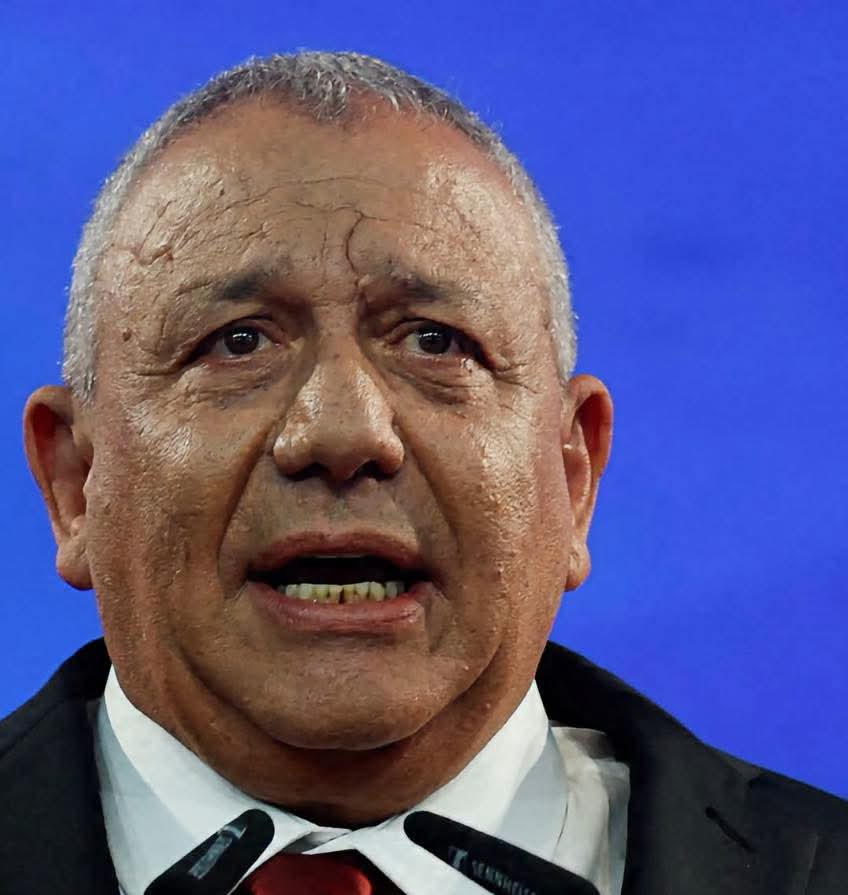
Israeli President Picks Gadi Eisenkot to Form Government, Challenging Netanyahu’s Leadership
Israeli President Isaac Herzog has granted opposition leader Gadi Eisenkot the first opportunity to form the country’s next coalition government following last month’s general election. The decision increases the possibility of Prime Minister Benjamin Netanyahu losing power after his political camp failed to secure a parliamentary majority.
Eisenkot, leader of the opposition Yashar Party, now faces the challenge of bringing together enough political parties to secure a confidence vote in Parliament and establish a new government.
The announcement has shifted the initiative in government formation towards the opposition, with Arab political parties playing an important role in the negotiations.
Gadi Eisenkot Receives First Chance to Form Israel’s Government
President Isaac Herzog announced on November 7 that Eisenkot had been granted priority authority to negotiate and form a coalition government.
Following the announcement, Eisenkot called for the formation of a national emergency government.
In a statement shared on X, he said the country had reached a moment when a national emergency government was needed and pledged to demonstrate that his political group was qualified to lead.
The decision places Eisenkot in a strong position to become Israel’s next prime minister, although he must first secure sufficient parliamentary support.
Netanyahu Faces Possible Loss of Power After Election
The general election held on October 27 failed to give either Netanyahu’s political camp or Eisenkot’s opposition bloc the 61 seats required for a parliamentary majority.
Netanyahu’s Likud party and its right-wing and religious allies secured 53 seats, representing a decline of 11 seats compared with the previous general election four years earlier.
The opposition led by Eisenkot secured 48 seats, while two Arab parties outside both political camps won a combined 19 seats.
Although Netanyahu’s camp secured five more seats than the opposition, support from Arab parties shifted the initiative in forming the next government towards Eisenkot.
Netanyahu attempted to prevent Arab parties from joining the opposition by alleging election fraud, but the effort ultimately failed.
Arab Parties Could Determine the Next Coalition Government
Support from Arab political parties has become a central issue in the negotiations over Israel’s next government.
Their backing has improved Eisenkot’s chances of securing the parliamentary support required to form a coalition. However, political support does not automatically mean the parties will join the government or vote in favour of a confidence motion.
Cooperation with Arab parties remains politically sensitive, particularly after divisions within Israeli society deepened during the three years of the Gaza War.
Eisenkot has indicated that he is willing to work with Arab political parties under certain conditions. These include classifying Hamas as a terrorist organisation that must be disbanded.
Netanyahu, meanwhile, has opposed the possibility of a government involving Arab parties.
In a video statement released shortly before Herzog’s announcement, the prime minister called for a national unity government and argued that a government involving supporters of terrorism should not be formed.
Eisenkot Has 28 Days to Form a Coalition
Under the government formation process, Eisenkot has 28 days from receiving the official mandate to negotiate and establish a coalition cabinet.
If he cannot complete the process within that period, the president may grant an additional 14 days.
During the negotiations, Eisenkot must reach agreements with potential coalition partners on government policies and cabinet positions.
Once an agreement is reached, he must present the proposed government to Parliament and seek a vote of confidence.
If the mandate is formally handed over on November 8, the initial negotiation deadline would fall on December 6. If the maximum extension is granted, the deadline would move to December 20.
What Happens If Eisenkot Fails to Form a Government?
If Eisenkot cannot form a coalition within the permitted period, President Herzog may give another member of Parliament the opportunity to negotiate a government.
The second candidate would receive 28 days to secure the necessary political agreements and parliamentary support.
If the second attempt also fails, or the president determines that forming a government is impossible, Parliament can enter another stage of the process.
At least 61 members of Parliament can collect signatures and ask the president to appoint a specific member to form the government. The nominated candidate would then receive a final negotiation period of 14 days.
If Parliament does not recommend a candidate within the required timeframe, or the final candidate also fails, Parliament is dissolved and a new general election must be held within 90 days.
Netanyahu Could Remain Prime Minister During Negotiations
Despite losing the initiative in government formation, Netanyahu does not immediately leave office.
He can continue serving as prime minister of the interim government until a new coalition is successfully established.
The coming weeks will therefore be important for both political camps. Eisenkot must secure enough support to establish a government, while Netanyahu could remain in office if the coalition negotiations fail.
The outcome will depend on whether Eisenkot can turn the opposition’s political advantage and support from Arab parties into a parliamentary majority.
Key Facts About Israel’s Government Formation
- Opposition leader: Gadi Eisenkot
- Political party: Yashar Party
- President: Isaac Herzog
- Current prime minister: Benjamin Netanyahu
- Election date: October 27, 2026
- Netanyahu’s political camp: 53 parliamentary seats
- Eisenkot-led opposition: 48 parliamentary seats
- Arab parties: 19 parliamentary seats combined
- Majority required: 61 parliamentary seats
- Initial coalition formation period: 28 days
- Possible extension: 14 additional days
- New election deadline if the process fails: Within 90 days after Parliament is dissolved
Frequently Asked Questions
1. Who has been chosen to form Israel’s next government?
Israeli President Isaac Herzog has given opposition leader Gadi Eisenkot the first opportunity to form the next coalition government.
2. Who is Gadi Eisenkot?
Gadi Eisenkot is the leader of Israel’s opposition Yashar Party and the politician selected by President Isaac Herzog to lead the initial coalition formation negotiations.
3. Why could Benjamin Netanyahu lose power?
Netanyahu’s political camp failed to secure the 61 parliamentary seats needed for a majority. Support from Arab political parties has shifted the initiative towards Eisenkot’s opposition.
4. How many seats did Netanyahu’s camp win?
Netanyahu’s Likud party and its right-wing and religious allies secured 53 seats in the October 27 general election.
5. How many seats did Eisenkot’s opposition secure?
The opposition led by Eisenkot won 48 parliamentary seats, while two Arab parties secured a combined 19 seats.
6. How many seats are needed for a majority in Israel’s Parliament?
A minimum of 61 seats is required to secure a parliamentary majority.
7. How long does Gadi Eisenkot have to form a coalition?
Eisenkot has an initial period of 28 days, with a possible 14-day extension granted by the president.
8. Will Arab political parties join Eisenkot’s coalition?
Their support has strengthened Eisenkot’s position, but it does not automatically mean they will join the coalition or support a confidence vote.
9. What happens if Eisenkot fails to form a government?
The president may give another member of Parliament an opportunity to form a coalition. If subsequent attempts also fail, Parliament can be dissolved and a new general election must be held within 90 days.
10. Can Netanyahu remain prime minister if coalition negotiations fail?
Yes. Netanyahu can continue serving as prime minister of the interim government until a new government is formed.
Latest Israel and International Political News
The decision to give Gadi Eisenkot the first opportunity to form Israel’s next government has created a significant political challenge for Benjamin Netanyahu. With no party bloc securing a parliamentary majority, negotiations and the position of Arab political parties will be central to determining the country’s next leadership.
For more international political developments and breaking world news, follow News As It Happens.
Contact: Info@newsaih.com
Related News
- Trump and Xi State Visit
- Iranian Foreign Minister Araghchi and President Pezeshkian at the UN
- Cardiff Summit Leaders
- Meloni’s School Veil Ban