President Ruto’s son unveils new Ksh14 million matatu.
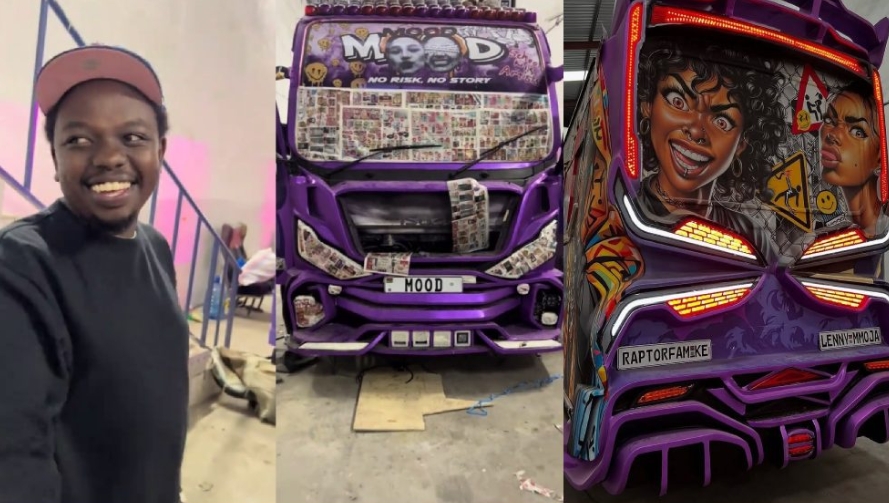
George Ruto, President William Ruto’s son, has once again grabbed attention, but this time, through his growing influence in the transport sector. His latest matatu project, dubbed ‘Mood’, has already caused a stir across social media, with Kenyans marvelling at its flashy design and luxurious features.
Photos of George at a Nairobi garage overseeing final touches went viral, showing him holding a custom number plate next to the now-trending vehicle.
Unlike the typical 32-seater matatus seen on the road, ‘Mood’ is a 25-seater that swaps numbers for space. It comes with a 2-by-1 seating layout, imported Chinese bucket seats, and enough legroom to match VIP lounges.
The matatu also comes loaded with entertainment features, including a 65-inch screen, solar panels, a live DJ deck, and a sound system valued at Ksh300,000. Industry watchers have called it the first of its kind in Kenya’s public transport history.
Building ‘Mood’ hasn’t come cheap. Sources say the full cost exceeds Ksh14 million, with the body and chassis alone pegged at Ksh6.8 million, and lighting systems adding another Ksh2.5 million.
Those familiar with Nairobi’s transport scene say ‘Mood’ could easily become the most expensive and stylish matatu ever built for local roads.
There’s speculation on where the matatu will operate. Some believe Embakasi or Rongai could be its next stop, especially after the rerouting of George’s earlier project, ‘Manifest’. Others suggest it might not serve regular PSV routes at all, instead focusing on corporate events, private hire, or club transport.
Whichever path ‘Mood’ takes, many agree it marks a bold shift in how Kenyans view matatus not just as vehicles, but as symbols of art, luxury, and influence.
To supporters and critics alike, the launch of ‘Mood’ seems like more than just a transport investment. For some, it reflects growing wealth and ambition within the president’s family. For others, it’s a statement of creativity and innovation in an industry often overlooked.
Either way, Kenya’s matatu culture may never be the same again.