
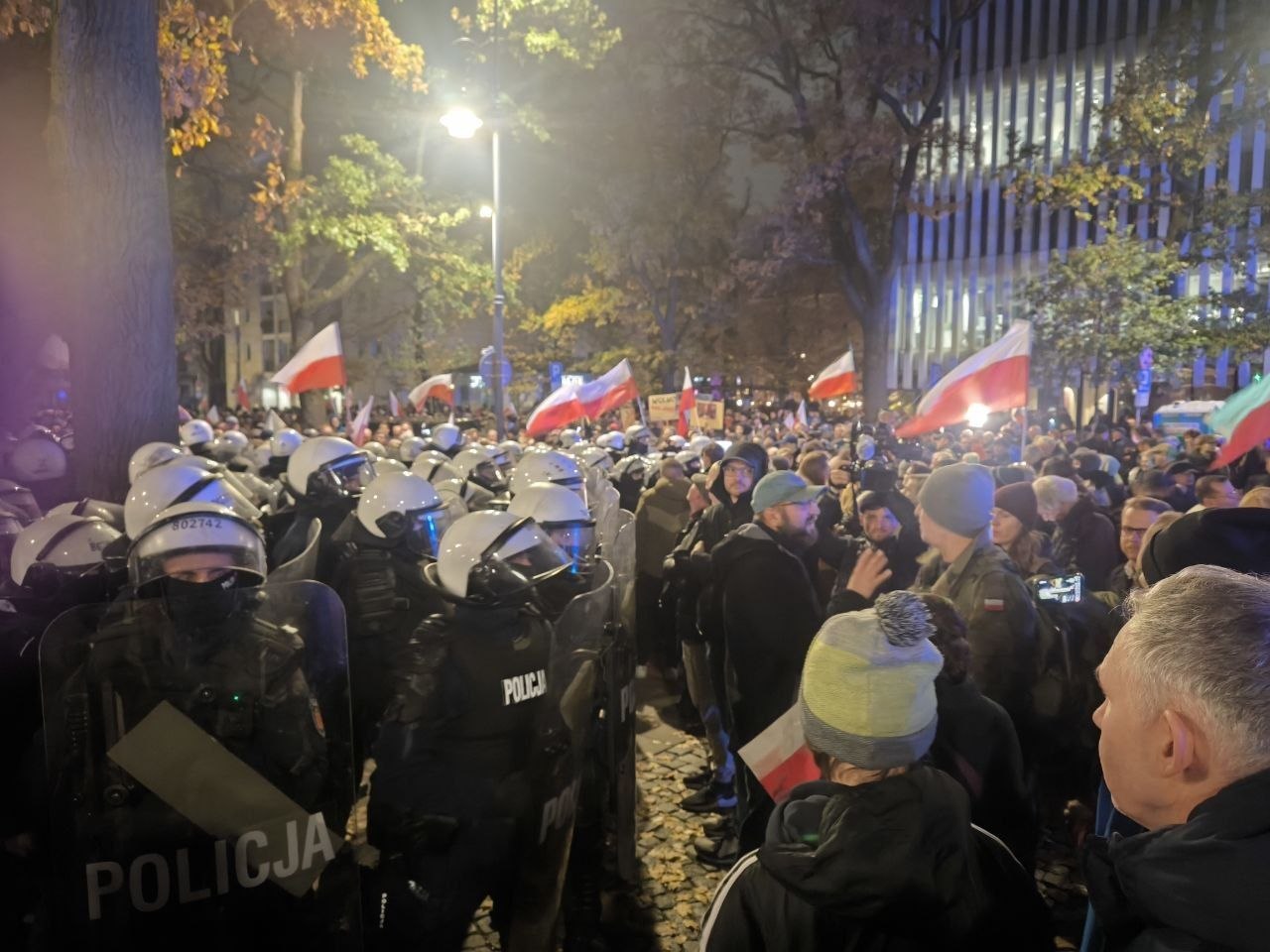
Poland Judicial Crisis Deepens as Police Block Tribunal President From Entering Court
Poland is facing a major judicial and political confrontation after police officers prevented Constitutional Tribunal President Bogdan Święczkowski from entering the court building in Warsaw. The incident prompted President Karol Nawrocki to cut short his trip to Senegal and return to Poland.
Nawrocki announced that he was turning back while his presidential aircraft was over Spain, saying the situation required his presence in the country. His chief of staff, Paweł Szefernaker, said the president would meet Supreme Court First President Zbigniew Kapiński after landing in Warsaw.
The confrontation has raised questions about the authority of Poland’s Constitutional Tribunal, the appointment of judges and the growing conflict between the government led by Prime Minister Donald Tusk and the presidency.
Why President Karol Nawrocki Cut Short His Senegal Trip
President Nawrocki was travelling to Senegal when he ordered his presidential aircraft to return to Poland.
He said that the situation at home required his immediate attention and that he was cutting short his visit. His aircraft attracted significant attention on Flightradar24 as it headed back towards Warsaw.
According to his chief of staff, Nawrocki planned to meet Supreme Court First President Zbigniew Kapiński upon his return.
The president’s decision followed a confrontation at Poland’s Constitutional Tribunal, where police officers were deployed and the court’s president was prevented from entering the building.
Poland’s Political Divide Behind the Judicial Crisis
The dispute reflects a wider struggle between two political camps that disagree over the legitimacy and authority of state institutions.
Prime Minister Donald Tusk, a former president of the European Council, has led the government since late 2023. His governing coalition controls parliament.
President Karol Nawrocki, who won the presidency in 2025 with support from the conservative Law and Justice party (PiS), holds presidential veto powers and has a role in swearing in judges.
The Constitutional Tribunal is responsible for ruling on whether laws comply with the constitution. Many of its judges were appointed during PiS’s time in government between 2015 and 2023. Tusk’s government argues that PiS captured the court and has refused to recognise many of its rulings. PiS maintains that the Tribunal is legitimate and accuses the government of attempting to take control of it.
Dispute Over New Constitutional Tribunal Judges
The current confrontation follows disagreements over judicial appointments.
This year, parliament elected new judges to the Constitutional Tribunal. However, President Nawrocki refused to swear several of them in, while Tribunal President Bogdan Święczkowski declined to allow them to hear cases.
The disagreement has contributed to the paralysis of the court and intensified the dispute over who has the authority to determine its leadership and composition.
The latest development came when Anna Korwin-Piotrowska, one of the newly elected judges who had not been sworn in by Nawrocki, declared herself acting head of the Tribunal.
She cited her position as the court’s longest-serving judge and announced the one-month suspension of Święczkowski and his deputy, Bartłomiej Sochański.
The order appeared on the Tribunal’s website, but the court’s official X account challenged its legitimacy.
Tribunal Rejects Leadership Change and Claims Website Was Seized
The Constitutional Tribunal’s official X account disputed the announcement and said its website had been unlawfully seized.
The account maintained that Święczkowski remained the legitimate president of the court and argued that Korwin-Piotrowska was not a Tribunal judge.
It also described the actions of those involved as a coup d’état.
The competing statements have further complicated the dispute, with both sides contesting the legitimacy of the decisions and the authority of the individuals involved.
Police Deployment Prevents Tribunal President From Entering Building
Police officers were deployed to the grounds of the Constitutional Tribunal following a request from Justice Minister and Prosecutor General Waldemar Żurek, who is part of Tusk’s government.
Police said officers had not entered the court building. However, Święczkowski and his deputy were prevented from entering.
A locksmith cut the lock on a side gate, allowing Święczkowski to access the court grounds. Police nevertheless continued to prevent him from entering the building.
Święczkowski described the newly elected judges as “usurpers” and said he would discuss the next steps with President Nawrocki.
The police presence also attracted PiS supporters, who gathered outside the court and shouted accusations at officers. Police said objects had been thrown at officers and that three people were detained after climbing a fence.
Is Poland Facing a Judicial Coup?
The confrontation has triggered sharply different reactions from political figures.
PiS leader Jarosław Kaczyński described the events as a move towards authoritarian rule, saying Poland was becoming a police state.
Former President Andrzej Duda also criticised the government, describing it as “bandit rabble.”
Grzegorz Braun, leader of the Confederation of the Polish Crown, compared the situation with the May 1926 coup led by Józef Piłsudski.
The government rejects the accusations. Justice Minister Waldemar Żurek argues that the real damage to the Constitutional Tribunal occurred years earlier, when PiS appointed its own judges.
Prime Minister Tusk defended the government’s actions, saying: “There is no other way.”
The competing positions show how deeply divided Poland’s political leadership remains over the Constitutional Tribunal and the legitimacy of its judicial appointments.
What Happens Next in Poland’s Constitutional Tribunal Dispute?
President Nawrocki’s return to Poland adds another layer to the confrontation, particularly as the dispute involves institutions connected to both the presidency and the government.
The immediate disagreement centres on the suspension of Święczkowski and his deputy, the authority of the newly elected judges, and the police presence at the court.
With the government and opposition offering conflicting accounts of the events, the situation remains a significant test of the country’s political and judicial institutions.
Key Facts About the Poland Judicial Crisis
- President: Karol Nawrocki cut short his trip to Senegal and returned to Poland.
- Prime Minister: Donald Tusk leads the governing coalition.
- Court involved: Poland’s Constitutional Tribunal in Warsaw.
- Tribunal president: Bogdan Święczkowski was prevented from entering the court building.
- Leadership dispute: Anna Korwin-Piotrowska declared herself acting head and announced a one-month suspension of Święczkowski and his deputy.
- Police deployment: Officers were sent to the court grounds following a request from Justice Minister Waldemar Żurek.
- Detentions: Police reported detaining three people after they climbed a fence.
- Political reaction: PiS leaders described the events as an attack on democratic institutions, while the government defended its actions.
Frequently Asked Questions About the Poland Judicial Crisis
1. Why did President Karol Nawrocki return to Poland?
Nawrocki cut short his trip to Senegal after the confrontation at the Constitutional Tribunal in Warsaw and said the situation required his presence in Poland.
2. What happened at Poland’s Constitutional Tribunal?
Police officers were deployed to the court grounds, and Tribunal President Bogdan Święczkowski was prevented from entering the building.
3. Who is Bogdan Święczkowski?
Bogdan Święczkowski is the president of Poland’s Constitutional Tribunal, whose position became central to the latest leadership dispute.
4. Who is Anna Korwin-Piotrowska?
She is one of the newly elected Tribunal judges who had not been sworn in by President Nawrocki. She declared herself acting head of the court and announced the suspension of Święczkowski and his deputy.
5. Why are Donald Tusk and Karol Nawrocki in conflict?
Their disagreement centres on the legitimacy and composition of the Constitutional Tribunal, particularly judicial appointments and the authority of the court’s leadership.
6. Why did police go to the Constitutional Tribunal?
Police were deployed following a request from Justice Minister and Prosecutor General Waldemar Żurek.
7. Did police enter the Tribunal building?
Police said officers had not entered the building. However, Święczkowski and his deputy were prevented from accessing it.
8. What did the PiS party say about the incident?
PiS leader Jarosław Kaczyński described the events as a move towards a police state and authoritarianism.
9. How did the Polish government respond?
The government defended its actions as an attempt to address problems it says were created when PiS appointed judges to the Tribunal. Tusk said there was no other way.
10. Why is the Constitutional Tribunal important in Poland?
The Tribunal rules on whether laws are constitutional, making its authority and judicial appointments central to the current political dispute.
Latest International News and Political Developments
Stay informed with the latest international news, political developments and global affairs from News As It Happens.
Read more related coverage:
- Cardiff Summit: Leaders and International Political Developments
- Trump and Xi State Visit: Developments in US-China Relations
- India-Switzerland Relations and Diplomatic Developments
- Explore the Latest World News
For news tips, editorial enquiries and contributions, contact Info@newsaih.com.