
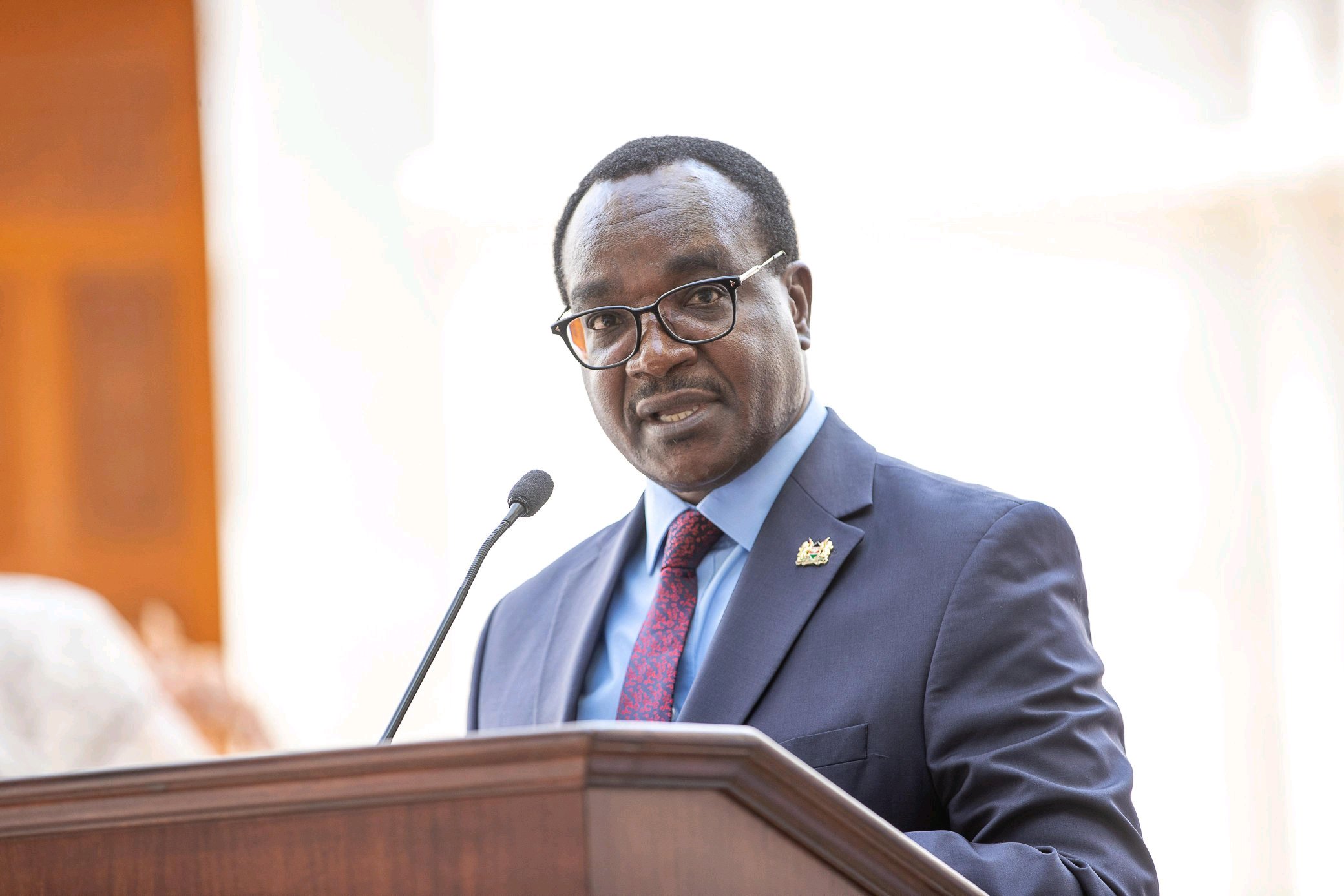
A nationwide audit has uncovered huge gaps between official school records and actual learner numbers, pushing Education CS Julius Ogamba to order investigations into suspected data fraud.
Kenya’s education sector is under fresh scrutiny after a government audit revealed widespread inconsistencies in school enrolment data, raising fears of possible manipulation of public funds.
Education Cabinet Secretary Julius Ogamba has now directed the Teachers Service Commission (TSC) and the Directorate of Criminal Investigations (DCI) to take action against teachers and officials linked to the irregularities.
The findings came from a nationwide School Data Verification exercise that compared figures in the National Education Management Information System (NEMIS) with physical headcounts in schools.
The gaps were striking.
In primary schools, NEMIS listed over 5.8 million learners, but on-the-ground verification confirmed about 4.9 million a difference of more than 885,000 learners.
Secondary schools showed a smaller but still significant gap of over 87,000 learners.
Junior secondary schools told a different story. Physical verification found over 543,000 more learners than what was captured in the system, exposing weaknesses in data capture and oversight.
Auditors also flagged suspicious learner records. Some students lacked valid identification numbers, others had duplicated exam details, while certain records didn’t match official school codes all red flags for possible capitation fund manipulation.
The report further revealed that 27 schools listed in government records were not operational, yet had never been officially deregistered.
Meanwhile, dozens of schools were found running far below minimum enrolment thresholds, pointing to gaps in supervision at the sub-county level.
Following the audit, 14 school heads face disciplinary action for failing to submit verification data, while 20 others are accused of inflating enrolment figures. Administrative action is also targeting education officers blamed for weak oversight.
The DCI is expected to investigate potential data falsification, while all unverified learner records have been frozen from receiving government funding until proper authentication is completed.
The ministry says this marks the beginning of tighter controls, with term-by-term verification planned as Kenya transitions to an upgraded education data system.
For many observers, the audit has exposed how fragile data integrity can directly affect funding, planning, and trust in the education system and why stricter accountability is now unavoidable.