US and Iranian officials resumed diplomatic contacts in New York on the sidelines of the United Nations General Assembly, even as President Donald Trump warned that he could take further military action against Iran if an agreement is not reached.
Iranian Foreign Minister Abbas Araghchi communicated with US special envoy Steve Witkoff and Jared Kushner during talks facilitated by mediators. The discussions marked the latest diplomatic effort to find a way forward in the conflict between Washington and Tehran.
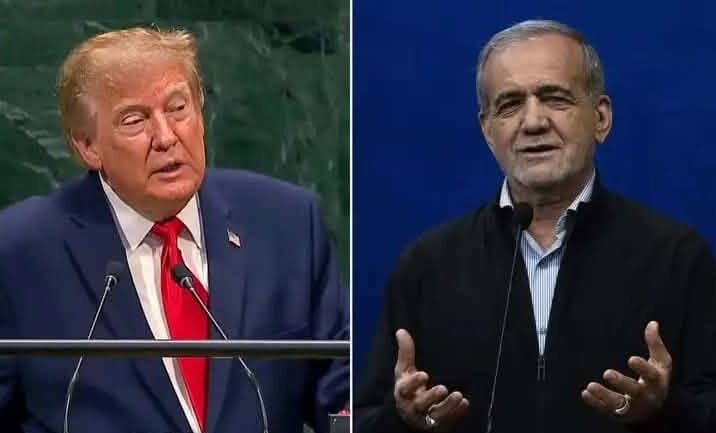
Trump had delivered a strongly worded address to the UN General Assembly in New York shortly before confirming that discussions with Iranian representatives had taken place.
The developments have placed Trump Iran talks at the center of attention as both sides consider whether diplomacy can produce an agreement.
Trump Warns Iran While Talks Continue in New York
Trump used his September 22 address to the United Nations General Assembly in New York to outline his position on Iran.
He said he faced a choice between reaching a deal that would allow Iran to rebuild and taking further military action against the Islamic Republic.
Trump also said he believed an agreement could eventually be reached, while continuing to demand that Iran address U.S. concerns, including its nuclear program. Reuters reported that Trump said a potential deal could come after the November U.S. midterm elections.
The speech demonstrated the conflicting messages surrounding the latest diplomatic effort: Washington is publicly maintaining pressure on Tehran while simultaneously pursuing negotiations.
US and Iran Hold Mediated Talks at UN General Assembly
The latest contacts took place in New York during the annual UN General Assembly.
Iranian Foreign Minister Abbas Araghchi and U.S. representatives Steve Witkoff and Jared Kushner communicated through mediators, according to Reuters. The discussions were the first such contacts between the two sides in months following the collapse of an interim ceasefire.
Witkoff later described the discussions positively, while officials did not announce a breakthrough or a change in the fundamental positions of either government.
The talks nevertheless created a new diplomatic channel between Washington and Tehran at a time when military tensions remain high.
Iran Sets Conditions for Reopening the Strait of Hormuz
The Strait of Hormuz is one of the central issues surrounding the negotiations.
Iranian state media reported that Araghchi conveyed conditions for reopening the strategic waterway. These included lifting what Tehran describes as a U.S. naval blockade, releasing frozen Iranian assets and ending the war across what Iranian officials call resistance fronts.
The Strait of Hormuz is a critical route for global energy shipments, making its continued disruption an international economic concern.
Any agreement that improves shipping conditions through the waterway could therefore have consequences for oil prices, fuel supplies and global trade.
Trump Says Iran Could Still Reach a Deal
Despite his warnings, Trump has continued to indicate that diplomacy remains possible.
During his UN speech, Trump said Iran could choose an agreement that would allow the country to rebuild and develop economically.
After the talks in New York, Trump said U.S. and Iranian representatives had held productive discussions and that another meeting was expected soon.
Reuters reported that Trump said there was momentum toward a possible agreement, although no final deal had been announced.
The comments suggest that Washington is maintaining diplomatic contacts while keeping military pressure as a potential alternative.
Iran Rejects Pressure From Washington
Iranian officials have continued to reject demands they consider unacceptable.
Iranian President Masoud Pezeshkian addressed the UN General Assembly in New York on September 23, saying that Iran would not surrender to U.S. pressure while maintaining that diplomacy remained possible.
Iran has also warned that another U.S. attack could result in a broader military response.
Iranian officials said the country could change the weapons and geographical scope of its response if hostilities resume.
The competing statements show that negotiations are taking place alongside continued threats and military tensions.
Strait of Hormuz Remains a Major Issue
The future of the Strait of Hormuz is closely linked to the wider Iran negotiations.
The waterway connects the Persian Gulf with the Gulf of Oman and is a major route for international energy shipments.
Recent fighting has already affected shipping through the region. The Associated Press reported on September 23 that another ship attempting to pass through the Strait of Hormuz was struck by a projectile, highlighting the continued risks facing commercial vessels.
For governments and energy markets, reopening the waterway and restoring safer shipping conditions are therefore important parts of any potential diplomatic settlement.
Trump Maintains Pressure on Tehran
Trump’s approach combines diplomatic engagement with continued threats of military action.
The U.S. president has repeatedly said that Iran must not be allowed to develop a nuclear weapon and has linked the conflict to broader U.S. security concerns.
During his UN speech, Trump said he could “annihilate” Iran if an agreement was not reached. Reuters reported that he also presented the possibility of a deal as an alternative.
The remarks have increased attention on whether Washington and Tehran can maintain negotiations despite the highly confrontational public statements.
Abbas Araghchi Leads Iran’s Diplomatic Effort
Iranian Foreign Minister Abbas Araghchi has been central to Tehran’s diplomatic engagement with the United States.
Araghchi participated in the latest discussions with U.S. representatives through mediators in New York.
Iran’s negotiating position has focused on issues including the war, sanctions, Iranian assets and the Strait of Hormuz.
Iranian state media reported that Araghchi conveyed Tehran’s conditions for restoring access through the strategic waterway during the latest contacts.
Steve Witkoff and Jared Kushner Represent Washington
Trump’s administration has relied on Steve Witkoff and Jared Kushner as part of its diplomatic contacts with Iran.
Both were involved in the latest discussions surrounding the UN General Assembly in New York.
The use of senior presidential representatives allows Washington to maintain a direct negotiating channel while Trump continues to publicly pressure Tehran.
Reuters reported that the latest contacts were conducted through mediators rather than being a conventional direct meeting between the American and Iranian delegations.
US Iran Talks Could Affect Global Energy Markets
The outcome of the US Iran talks could extend beyond Washington and Tehran.
The conflict has already contributed to disruptions affecting oil supplies and shipping routes.
The Strait of Hormuz is particularly important to international energy markets, while continued instability in the Middle East has contributed to volatility in oil and fuel prices.
A diplomatic agreement that reduces military activity and improves shipping conditions could therefore affect energy markets internationally.
Conversely, a breakdown in negotiations followed by renewed military action could create additional uncertainty for shipping and energy supplies.
Trump and Iran Face Difficult Negotiations
The latest talks do not represent a final agreement.
Washington and Tehran continue to disagree over major issues, including Iran’s nuclear program, sanctions, military activity and control of the Strait of Hormuz.
The two sides have nevertheless reopened diplomatic communication through intermediaries.
The talks in New York are therefore significant because they create an opportunity for further negotiations despite the continuing conflict.
What Happens Next in the Trump Iran Talks?
The next stage of the Trump Iran negotiations will depend on whether the two sides can bridge their differences.
Trump has indicated that further discussions are expected, while Iranian officials have continued to insist on conditions of their own.
For now, there is no announced final peace agreement or comprehensive settlement.
The immediate focus is on whether additional meetings can produce progress on the conflict, the Strait of Hormuz, sanctions and Iran’s nuclear program.
The diplomatic contacts at the United Nations in New York have opened another channel between Washington and Tehran, but significant disagreements remain.
As the negotiations continue, the Trump Iran talks will remain closely watched because their outcome could affect not only the United States and Iran but also shipping, energy markets and security across the Middle East.
Contact Newsaih
Have a news story or political update to share?
Phone: (650) 123-2558
(650) 123-0247 (fax)
Read our more articles
Malawi Deputy IG Rescues British National
Health Concerns After BRICS Summit
Zimbabwean Arrested Over Death Threat
Araghchi and Pezeshkian Arrive in New York
Mystery Surrounds Death of CEO Okey Ezeibe
Fresh Arrests in South Africa After Murders