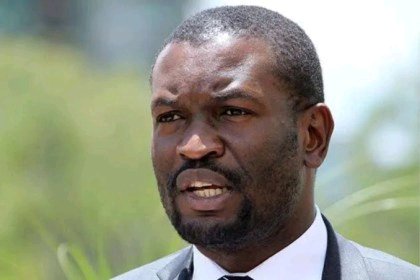
Political commentator and blogger Robert Alai has reignited debate around recent political alignments by calling out what he terms hypocrisy among senior political figures.
Alai questioned the moral authority of Nairobi Senator Edwin Sifuna to lecture others about political friendships and alliances, citing events from the recent past that he says contradict Sifuna’s current posture.
Alai recalled claims from 2023 when, according to him, Sifuna played a central role in mobilising senators during the impeachment push against then Deputy President Rigathi Gachagua.
He alleged that the process involved inducements linked to figures close to former President Uhuru Kenyatta, a move he says undermines Sifuna’s current image as a principled and independent political actor.
While these claims remain part of the wider political narrative rather than proven facts, they continue to shape public opinion in a deeply polarised environment.
The blogger further questioned Gachagua’s political judgment, suggesting that the former deputy president failed to recognize who was working against him at the time.
Alai argued that it was ironic for leaders who were once on opposite sides of a high stakes political battle to now present themselves as allies united by integrity and shared values.
His remarks have sparked fresh discussion on social media, with supporters and critics weighing in on the nature of political loyalty and convenience in Kenya’s power struggles.
Some observers view the comments as a reminder of how quickly political friendships shift, often driven more by survival than ideology. Others see them as part of the ongoing blame game that defines the country’s political discourse.
As the debate continues, Alai’s comments underscore a broader question facing Kenyan politics: whether leaders are willing to honestly confront their past actions or simply reinvent themselves when circumstances change.