
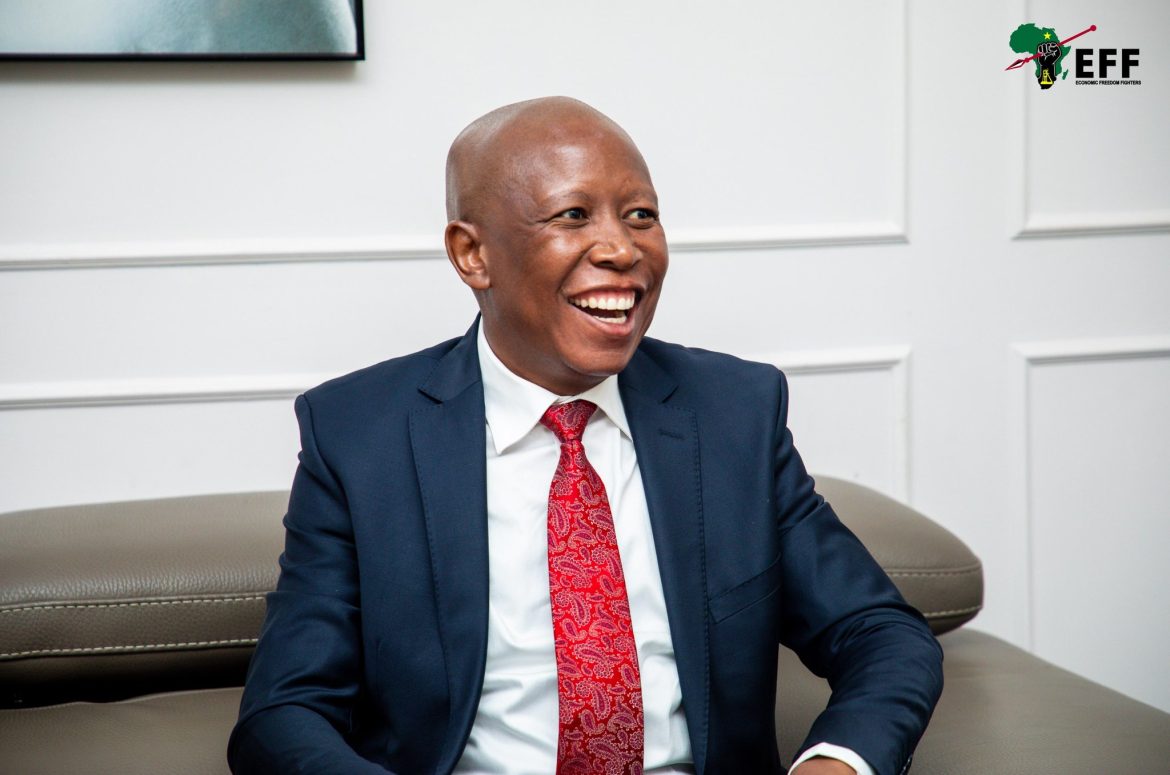
EFF’s Julius Malema Tells Nigerians: ‘Africa Will Never Be Subject to Trump’s Policies’
Julius Malema Tells Nigerians: ‘Africa Will Never Be Subject to Trump’s Policies’. In a powerful keynote address at the Nigerian Bar Association’s 2025 Annual General Conference in Enugu, South African politician and Economic Freedom Fighters (EFF) leader Julius Malema declared that Africa must unite and reject external influences, emphasising that the continent would never bow to foreign agendas.
Malema’s Stirring Call for African Solidarity and Independence
At the opening ceremony of the Nigerian Bar Association (NBA) 2025 Annual General Conference held at the Enugu State International Conference Centre, Julius Malema delivered a keynote speech that resonated with themes of pan-African unity, economic emancipation, and resistance against imperialism. The event, themed “Stand Out, Stand Tall”, drew over 20,000 lawyers, dignitaries, and guests from across Nigeria and beyond, marking a significant gathering for the legal profession in Africa.
Malema, the founder and president of the EFF, spoke passionately about Africa’s need to reclaim its resources, build industries on the continent, and foster borderless unity. He highlighted the historical ties between South Africa and Nigeria, recalling Nigeria’s support during the apartheid era through initiatives like the Southern African Relief Fund and the Mandela tax, which aided South African liberation efforts. “Nigeria is not just another African country to us. It is a comrade nation,” Malema said, urging both nations to collaborate on industrialisation, energy, and agriculture to break cycles of dependency on foreign powers.
He criticised xenophobia in South Africa, calling it a betrayal of African unity born from poverty and inequality. Malema stressed that attacks on fellow Africans, including Nigerians, divert attention from the real issues of untransformed economies controlled by minorities and multinational corporations. “We must prove to the whole world that we are not xenophobic. We love one another,” he asserted, advocating for visa-free travel between South Africa and Nigeria and across the continent.
Rejection of External Policies and Support for Global Struggles
A highlight of Malema’s address was his firm stance against external interference, particularly referencing potential influences from the United States. “We don’t care what Trump thinks of us. He will never choose a policy position for Africans. We are not subject of Trump,” Malema declared, emphasising Africa’s sovereignty and equality with global powers like China, Russia, and America. He envisioned a united Africa with one president, one currency, one military command, and one parliament, arguing that such unity would strengthen the continent’s currency and global standing.
Malema extended his solidarity to oppressed peoples worldwide, supporting Western Sahara against Moroccan occupation, Palestine against Israeli actions, Cuba against US blockades, Haiti for reparations, and the Democratic Republic of Congo for peace amid resource exploitation. He praised South Africa’s legal action against Israel at the International Court of Justice (ICJ) for alleged genocide in Gaza, noting the court’s ruling and arrest warrants for Israeli leaders as victories for international law. However, he critiqued the hypocrisy in global legal systems, which he said are swift against Global South leaders but lenient towards Western allies.
The NBA Conference: Theme, Relocation, and Historical Context
The conference, running from 22 to 29 August 2025, was originally planned for Port Harcourt in Rivers State but relocated to Enugu in April 2025. This decision followed concerns over the appointment of a military administrator in Rivers State, which the NBA viewed as a threat to constitutional democracy. NBA President Mazi Afam Josiah Osigwe, a Senior Advocate of Nigeria (SAN), praised the move, stating it aligned with the association’s commitment to promoting the rule of law. “If it was business as usual, this conference would not hold in Enugu,” said Victor Odo, Chairman of the NBA Enugu Branch.
Enugu’s selection was celebrated for its historical significance. Known as the “Coal City” founded in 1908 on hilltop farmlands where coal was discovered by British colonialists, Enugu has a legacy of resilience. Speakers referenced the 1949 Iva Valley coal miners’ strike and massacre, where 21 unarmed miners were killed by colonial police, sparking anti-colonial sentiments across Nigeria. “Just like the resistance against colonial oppression during the 1949 coal miner strike in this city, Enugu has long stood out and stood tall,” noted Chief Emeka Ngige, SAN, Chairman of the Annual General Conference Planning Committee.
The Sultan of Sokoto, His Eminence Muhammad Sa’ad Abubakar III, chaired the opening ceremony, delivering remarks on justice, law reform, and decolonising African laws. He quoted the Quran and Islamic scholars, urging lawyers to address social justice, inequalities, and access to justice amid rising litigation costs. Former Nigerian President Olusegun Obasanjo also attended, chairing aspects of the ceremony and symbolising Nigeria’s historical support for South African liberation, which Malema acknowledged by requesting a visit to Obasanjo and the family of late activist Ken Saro-Wiwa.
Enugu’s Preparations and Conference Highlights
Enugu State Governor Dr Peter Mbah hosted the event, transforming the city into a conference hub. Under his leadership, Enugu has seen infrastructure upgrades, including the commissioning of Enugu Air for extra flights, 100 compressed natural gas (CNG) buses, five modern transport terminals, and the revamped Hotel Presidential. These enhancements ensured seamless logistics for delegates, with participants praising the city’s cleanliness, efficient transport, and hospitality.
The conference kicked off with a health walk on 24 August 2025, led by Osigwe through Enugu’s major roads, promoting wellness among lawyers. Sessions cover constitutional reforms, judicial independence, artificial intelligence in law, climate law, and ethical challenges in legal practice. Osigwe encouraged active participation, stating, “This theme is a bold mandate for our profession in these defining times.”
Local Organising Committee Chairman Ikeazor Akarue, SAN, admitted minor lapses due to the short four-month preparation time but highlighted the miracle of hosting in a city that last held the conference in 2003. “We thank our governor who more or less built this international conference centre within one year and eight months,” he said.
Malema’s EFF Vision and Broader Implications
Malema outlined the EFF’s seven non-negotiable cardinal pillars, including land expropriation without compensation, nationalisation of mines and banks, and building state capacity to abolish tenders. He shared legislative efforts like bills for nationalising South Africa’s Reserve Bank, regulating foreign loans, cancelling student debt, and insourcing services to combat corruption.
He called for local procurement, banning alcohol advertisements that glamorise drinking, and ending outsourcing that drains public funds. “Why should a prison in Enugu buy vegetables from Lagos? They must buy where they are to promote local economy,” Malema urged, linking these to broader African economic growth.