A fresh legal battle has emerged over the planned expansion and tolling of the Rironi–Nakuru–Mau Summit Highway. Motorists claim that handing the road to private and foreign operators through a PPP model is unfair and unconstitutional.
The Motorists Association of Kenya, along with petitioners Peter Murima, Joyce Wamahiu, and Josphat Kamau, filed in the High Court in Nakuru. They seek a suspension of construction until the government justifies why a taxpayer-funded highway should now carry tolls.
Petitioners argue that motorists already pay significant taxes, including the Road Maintenance Levy Fund (RMLF), and the new toll of roughly KSh8 per kilometre constitutes double taxation on an existing public asset.
They claim cumulative fuel taxes now approach 90% of the landed cost, placing heavy financial strain on drivers. Introducing toll booths, they argue, unfairly burdens users, despite the road being publicly funded and maintained over the years.
The highway sits on public land, the petitioners say, and transferring control to private companies under PPP or Build-Operate-Transfer (BOT) models alienates citizens from infrastructure they already own and should freely access.
Lawyer Jordan Kanga criticized the government for underfunding national highways over 16 years, claiming it created a pretext for privatization disguised as modernisation. He warns that foreign control threatens Kenya’s sovereignty and limits local employment opportunities.
The petition lists respondents, including the Cabinet Secretary for Roads, KeNHA, the PPP Directorate, CRBC, NSSF, and the Attorney-General. Petitioners seek court orders requiring government funding through taxes, loans, or the RMLF instead of imposing tolls.
They also argue tolling violates the Constitution by restricting access to public land and infringing freedom of movement. Petitioners maintain national highways benefit the public at large, so imposing charges only on motorists is discriminatory.
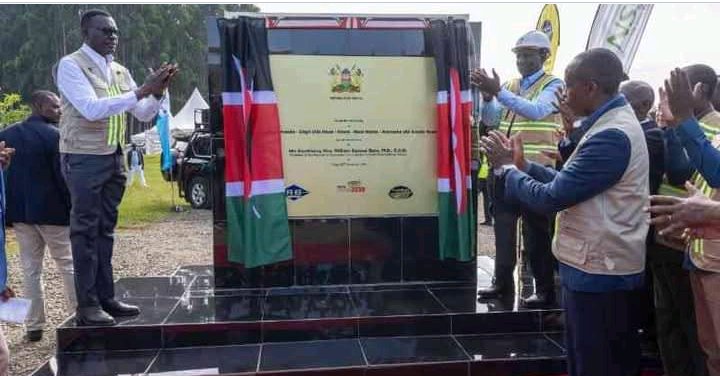
The case coincides with President Ruto launching the highway expansion in Nakuru, a KSh170–200 billion project aimed at reducing congestion. The construction, managed under PPP with CRBC involvement, is slated for completion by May 2027, connecting Nairobi to western Kenya efficiently.