
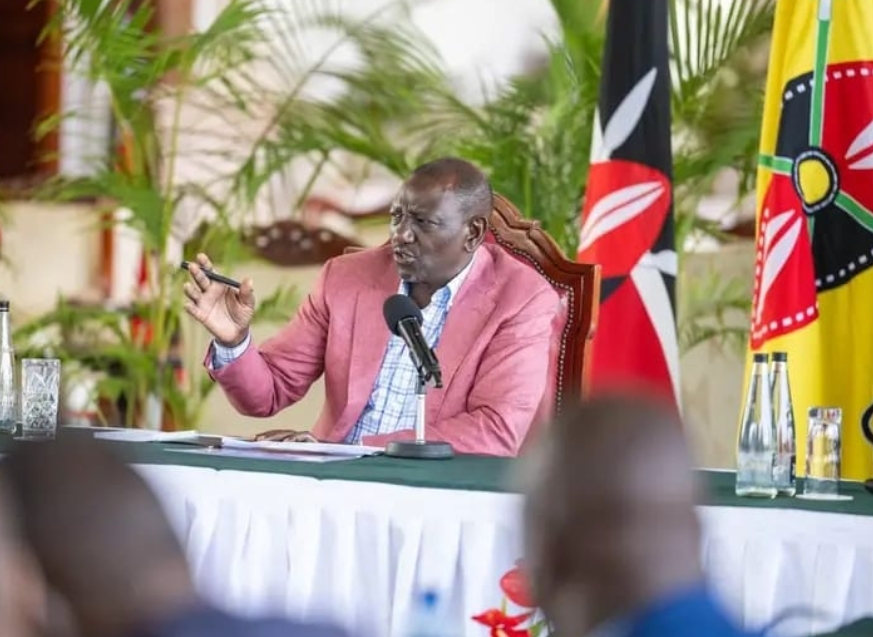
Allegations claim President Ruto plans to sell KPC for KSh 100 billion.
Kenya’s political scene is once again in turmoil after reports surfaced alleging that President William Ruto intends to sell the Kenya Pipeline Company (KPC) to his Nigerian son-in-law for KSh 100 billion.
The claim, reportedly made by Deputy President Rigathi Gachagua, has caused shock across the country. Many Kenyans are questioning how a company said to be worth around KSh 600 billion could allegedly be sold for such a low price.
The news has reopened debates about how state corporations are managed and whether public assets are being protected from potential abuse.
The Kenya Pipeline Company is one of the country’s most important state-owned firms. It oversees the transportation of petroleum products across Kenya and supports both industrial growth and national revenue.
Any mention of privatising or selling the company immediately sparks strong public reactions, particularly when issues like undervaluation and nepotism are alleged.
At the centre of the storm lies a deeper concern about transparency in government operations. Critics argue that if such a transaction were to happen without independent valuation, parliamentary oversight, or public consultation, it would be a serious betrayal of public confidence.
Previous privatisation efforts have left painful memories, with several state enterprises having been sold cheaply to politically connected individuals. Many fear a repeat of those mistakes.
Supporters of privatisation, however, believe that bringing in private investors could improve efficiency, reduce government spending, and open new opportunities for growth.
They insist, though, that any sale must be done through proper procedures, guided by due diligence and public participation, to avoid corruption and unfair enrichment.
The allegation that the buyer could be related to the President raises moral and ethical questions. Even if the transaction were legitimate, the connection would likely create a perception of favouritism and weaken public trust.
The Constitution of Kenya demands transparency and integrity in public affairs, requiring leaders to avoid situations where personal interests conflict with national responsibilities.
The controversy has underscored a rising sense of vigilance among Kenyans. Citizens now demand openness, value for money, and assurance that national resources are managed fairly.
Civil society groups, the media, and oversight bodies are increasingly taking a central role in investigating such claims to ensure truth prevails over rumour.
Whether the allegations are factual or politically motivated, the debate reflects a broader test of integrity and governance.
The Kenya Pipeline saga is not merely about figures or ownership; it symbolises the struggle between power, accountability, and public faith.
Safeguarding Kenya’s strategic assets demands transparency, fairness, and leadership guided by truth rather than personal interest or political convenience