
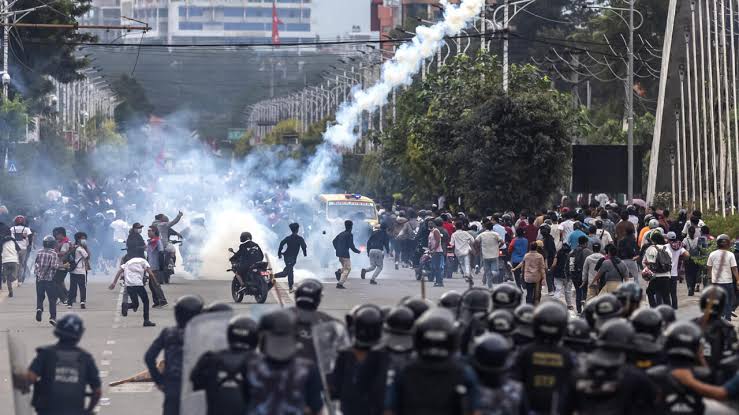
Nepal is rocked by violent youth-led protests after a social media ban.
One of the darkest moments of the unrest came when protesters set fire to the home of former Prime Minister Jhala Nath Khanal. His wife, Rajyalaxmi Chitrakar, was trapped inside. She suffered severe burns and later died, despite attempts to save her. The incident shocked the nation and showed how far the violence has gone.
The wave of anger has not spared the country’s top leaders. Protesters stormed the residence of President Ram Chandra Poudel, vandalised the home of Prime Minister K.P. Sharma Oli, and attacked former PM Sher Bahadur Deuba and his wife. The destruction underscored how the protests have turned personal and dangerously violent.
With homes torched, flights disrupted, and lives lost, ordinary people are living in fear. India has already issued a travel advisory, warning its citizens to be cautious. The unrest is now a matter of regional concern.
Rajyalaxmi’s death has become a painful symbol of political anger spilling beyond control. Once seen as a supportive figure by her husband’s side, she became a victim of mob rage. Her death raises tough questions about how Nepal’s leaders will restore calm and prevent further bloodshed.
While the protests began as a youth-led demand for freedom of expression, violence has overtaken the message. Without dialogue and restraint, Nepal risks sliding into deeper instability.