Vindicated: Intersex Kenyan athlete’s ordeal ends in Sh1m award
In a landmark decision, the High Court ordered the government to pay intersex athlete Sheiys Chepkosgei Sh1 million for the suffering she endured at the hands of police officers and hospital staff.
The judge went further, directing the State to amend prison laws and immediately modify police cells and correctional facilities to accommodate intersex persons—a community long pushed into the shadows and treated as an anomaly.
For Chepkosgei, 35, the ruling was not just about money or facilities. It was a public acknowledgement of her trauma, a story that began in childhood and has played out in the harshest arenas of life: police cells, courtrooms, prisons, and the streets of Eldoret.
“I was violated at Central Police Station. They stripped me naked and photographed me. I can never forget that humiliation,” she recalled in an interview, her voice carrying the weight of wounds still raw.
Born in Uasin Gishu on December 28, 1990, Chepkosgei is the third child in a family of five.
Her parents assigned her a male name, dressed her in boys’ clothes, and sent her to school like any other boy. But by the age of five, she felt a strong awareness that she was a girl.
My daughter
Her family accepted her in private, but the larger clan branded her strange. Some even dismissed her as “makararan met,” Kalenjin for mentally abnormal.
Her father, however, refused to deny her reality. He lovingly called her “cheptanyu” (my daughter). Yet, the acceptance at home did little to shield her from a society that saw her existence as deviant.
By the time she was a teenager, Chepkosgei had become adept at masking her pain, living in a body that placed her between two worlds.
The bullying was constant and the whispers unrelenting.
Her troubles with the government began in 2009. Having worked as a house help in Eldama Ravine and later Mombasa, she applied for a national ID card.
The registrar of persons, however, recorded her as male. That single stroke of a pen would go on to haunt her for years.
While working at Kimumu, Uasin Gishu County, an acquaintance from her home area told her employer that she was not a woman but a man. The revelation triggered suspicion and eventually police involvement.
She was arrested and detained at Eldoret Central Police Station on allegations of impersonating a female person.
For a week, she was confined in a male cell, stripped of her dignity, until her family intervened and demanded her release. Her employer confirmed she had committed no crime, but the ordeal had already left deep scars.
Not long after, her ID went missing. When she applied for a replacement, officials at the registrar’s office in Uasin Gishu refused to process her application, insisting she “looked female” but had a male’s details.
Her passport and birth certificate, which recorded her as female, only deepened the bureaucratic nightmare.
The inconsistencies set her on a collision course with authorities.
“Because of the incongruence between my gender identity and the sex assigned at birth, I have been misunderstood, physically assaulted, mentally tortured, discriminated against, and humiliated by both the public and state officers,” she told the court. “I have lived a lonely life where every day is a struggle for survival.”
Her most harrowing encounter came on June 14, 2019, when she was arrested at Moi Teaching and Referral Hospital (MTRH) in Eldoret.
She had gone there seeking help, but instead found herself accused of impersonation.
Police claimed she had posed as a nurse under the name Pamela Mulupi. Investigating officer Victor Omondi told the court that Chepkosgei had been in uniform at the emergency section and that other nurses raised an alarm after failing to trace her name in the interns’ register.
But her ordeal did not end there. When she informed prison authorities that she was intersex, officers conducted an intrusive examination of her genitals.
They then recommended her transfer to a male facility, a move only delayed when the Director of Public Prosecutions asked that she be held at Eldoret Police Station pending “gender verification.”
The phrase itself was chilling, as though her humanity could be reduced to a test.
At the hands of the police, she was forced into a male cell yet again. Officers mocked and slapped her.
“They laughed at my bras and panties, scattered them on the floor,” she recalled.
The final indignity came at MTRH, where medics forced her to strip naked in front of three men, including the investigating officer. Their task was to “determine her gender.”
The doctors later told the court they could not establish her sex conclusively. Yet, they were paraded as witnesses against her in the case.
By 2019, Chepkosgei was no longer just a private individual navigating personal battles. She was in the dock, accused of impersonation.
Police insisted she had obtained identification by false pretense, and even accused her of cheating in athletics by competing in women’s events.
Omondi, the investigating officer, dismissed her case outright. “Transgender does not exist in law,” he argued, claiming she had used deceit to gain advantage.
Her identity was treated as a spectacle. In one hearing, court officials, journalists, and strangers looked on as her documents – birth certificate, passport, and ID – were scrutinised, each pointing in a different direction.
To the magistrate, the contradictions were puzzling. To Chepkosgei, they were a lifetime of confusion, stigma, and rejection finally laid bare.
Systemic failure
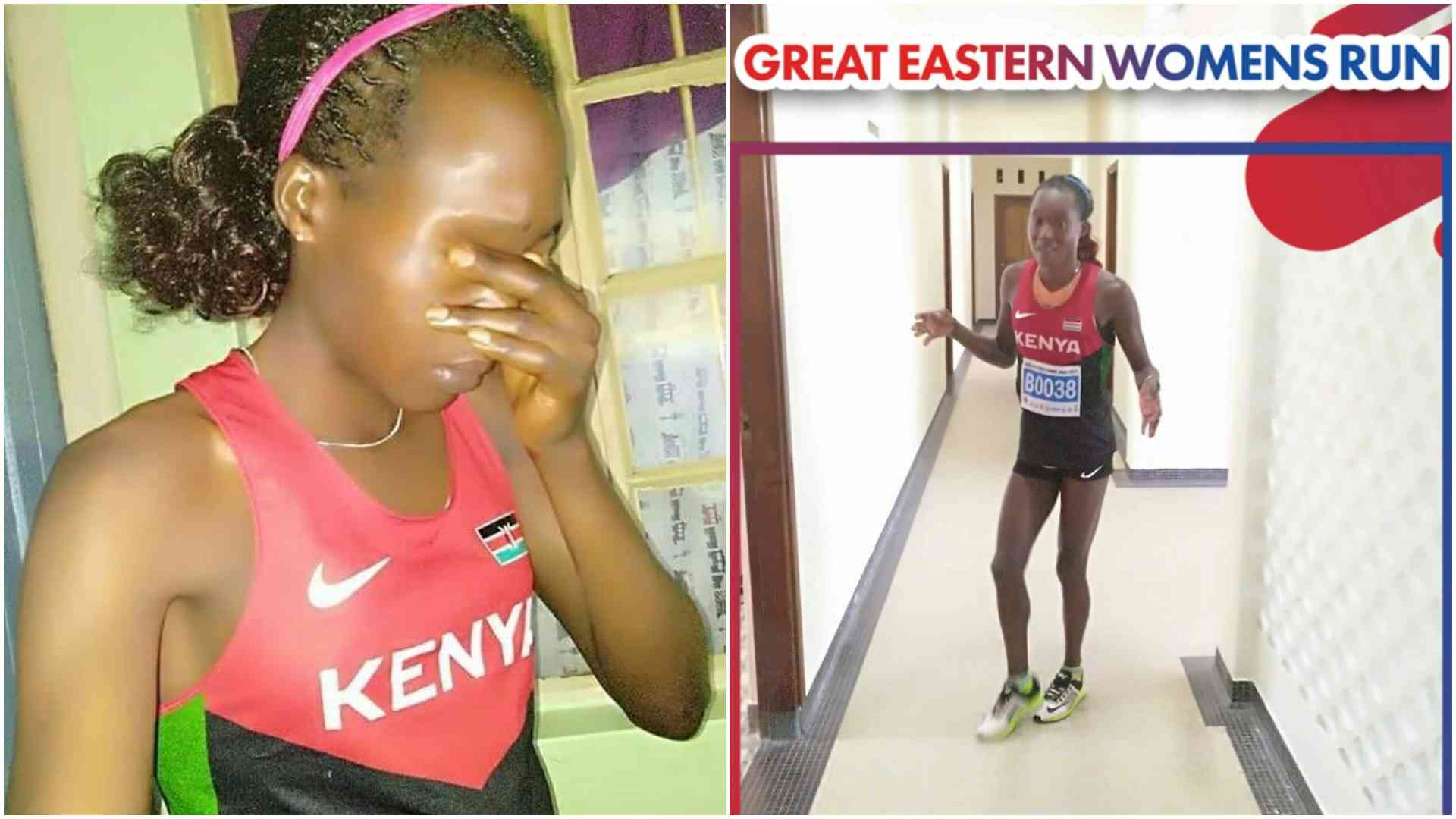
She admitted she had registered as female in athletics because that was who she was. “I was identified as male, but when I became an athlete, I registered as female,” she told the court.
By then, she had competed in Malaysia, Morocco, Tanzania, and Zambia, where she had won medals.
The magistrate ordered her remanded for 10 days as further investigations were carried out, including medical examinations at MTRH.
Years later, her persistence bore fruit. Justice Nyakundi delivered a judgment that not only vindicated her but also acknowledged the systemic failure that had enabled her suffering.
The judge ruled that the State violated her rights by confining her with male suspects and ordered the government to pay her Sh600,000.
Moi Teaching and Referral Hospital was ordered to pay an additional Sh400,000 for breaching her privacy and dignity.
“The conduct of the officers was unprofessional and bordered on discrimination and undue humiliation,” Justice Nyakundi declared. “The threats, insults, and the stripping were completely unnecessary. It was a violation of her rights.”
For Chepkosgei, the ruling was a balm on old wounds and a beacon for those still suffering in silence.
“This is not just my win, it is a win for the community,” she said after the judgment. “Intersex is biological. We have no control over it. My hope is that this will open doors for better understanding and acceptance.”