
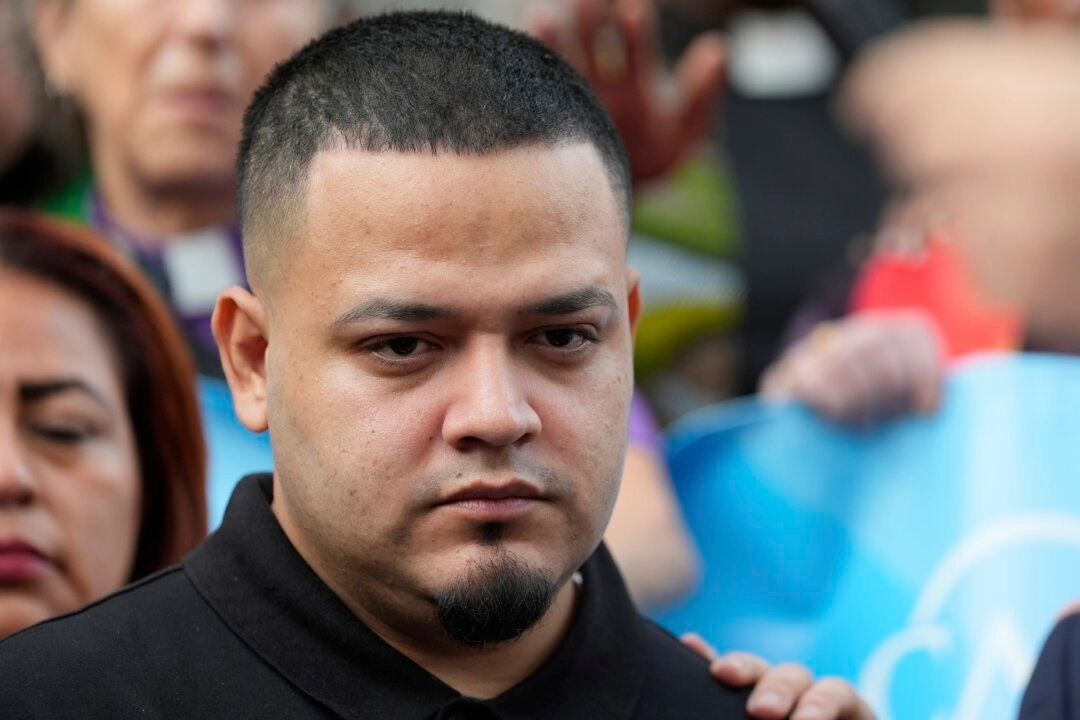
US backs down after Ghana refuses to accept Abrego Garcia
The Government of Ghana has confirmed that the United States Department of Homeland Security (DHS) has complied with its decision not to accept the deportation of Abrego Garcia to Ghana.
In a statement issued by Foreign Minister Samuel Okudzeto Ablakwa, the government expressed satisfaction with the U.S. authorities’ acknowledgment of Ghana’s position on the matter.
“The Ghanaian Government is pleased to note that our refusal to accept Abrego Garcia has been duly acknowledged and complied with by the US Department of Homeland Security,” the statement read.
Ablakwa further indicated that the government had been monitoring developments closely and welcomed the corrective actions taken by U.S. authorities.
“We have also followed with satisfaction that DHS has today taken the appropriate steps to inform Garcia’s lawyers and amend court submissions to reflect the fact that Ghana cannot be an option for Garcia’s deportation,” he stated.
The minister reaffirmed the government’s commitment to openness and accountability in its dealings with both citizens and international partners.
“The Mahama Administration will continue to be transparent and truthful to Ghanaians at all times,” he concluded, signing off with, “For God and Country.”
3 African countries say they won’t accept Kilmar Abrego Garcia as battle plays out in two courts over his fate
Officials from three different African nations have said they won’t let the US deport Kilmar Abrego Garcia to their countries, potentially frustrating the Trump administration’s plans to keep him in custody.
The rejections – two of which were revealed by a senior Immigration and Customs Enforcement official in a Maryland courtroom on Friday – could lead a federal judge to order the administration to release Abrego Garcia from immigration custody for now, if she decides that his deportation does not appear imminent.
The countries – Uganda, Eswatini and Ghana – have said at various points in recent weeks that they would not allow Abrego Garcia, the Maryland man unlawfully deported to El Salvador in mid-March and later brought back to the US to face human smuggling charges, to be put on a plane and sent to their territories.
Under a 2019 court order, US officials are barred from sending Abrego Garcia to El Salvador, his home country, which he fled years earlier amid threats of gang violence.
US District Judge Paula Xinis did not rule Friday on the request from Abrego Garcia to be released from the detention facility he’s being held at in Pennsylvania. But in a lengthy hearing, she appeared at times to be unconvinced that the government had shown a compelling reason to keep him detained.
The hearing was the latest episode in Abrego Garcia’s ongoing attempt to get courts to intervene in his immigration case to ensure the Trump administration doesn’t run roughshod over his due process rights months after he was wrongly deported.
Several states away on Friday, another set of attorneys for Abrego Garcia went before a federal judge in Nashville to sort out how much they can pry into the Trump administration’s innerworkings as they seek to have his criminal charges thrown out based on their claim that he’s being unfairly prosecuted.
His team told US District Judge Waverly Crenshaw that they will ask him in the coming days to force federal prosecutors to hand over communications from senior Justice Department officials, including Deputy Attorney General Todd Blanche, as part of the court-ordered fact-finding process that will help buttress their bid to get the case dismissed.
Prosecutors say the decision to indict Abrego Garcia rested with Tennessee’s acting US Attorney Robert McGuire and that McGuire was not influenced by Trump administration officials.
“Any communications between senior government actors themselves about this case, but which did not influence the Acting United States Attorney because they did not reach him or were not communicated to him (i.e. not “tied to the actual decisionmaker”), would not be discoverable,” the government wrote in court papers this week.