
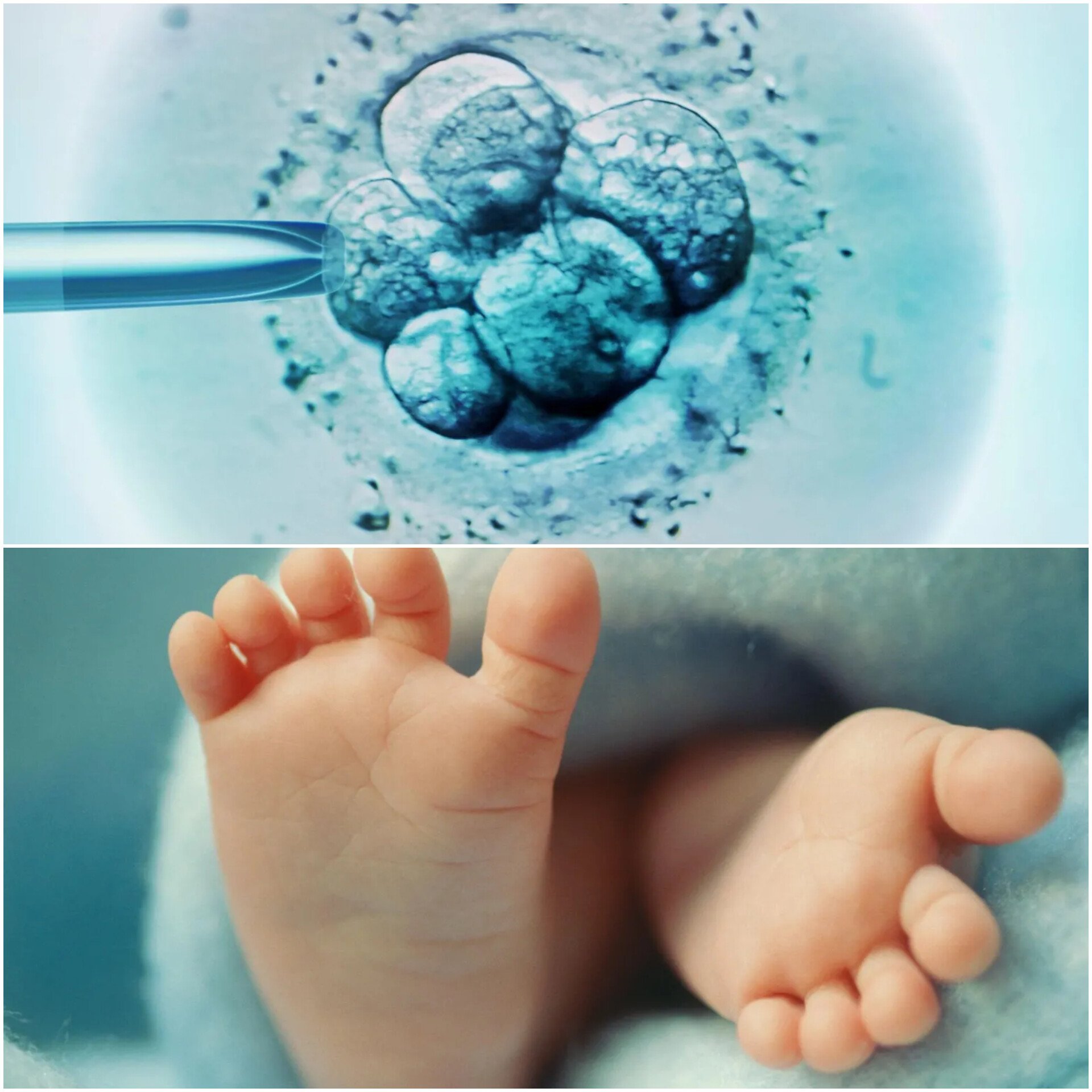
The UK has announced the successful birth of eight babies using a pioneering genetic technique involving DNA from three individuals — a breakthrough that offers families new hope against devastating mitochondrial diseases.
The births, which took place through the Newcastle Fertility Centre, mark the first clear proof that a technique combining the DNA of two parents with that of a donor woman can produce healthy babies without the inherited, incurable condition.
The method involves using: The nuclear DNA from the baby’s biological mother and father, Healthy mitochondria from a second woman’s egg, making her the “third parent” in genetic terms, although her contribution is less than 0.1% of the baby’s total DNA
Mitochondria are tiny powerhouses in cells that generate the energy our bodies need. When defective, they can lead to severe conditions that affect the brain, heart, and muscles, often proving fatal in infancy.
Since mitochondria are passed only through the mother, replacing them with healthy ones from a donor can prevent the diseases from being inherited.
22 families underwent the procedure since it became legally available in the UK in 2017
Eight babies have been born: 4 boys, 4 girls (including twins)
All are free of mitochondrial disease and meeting normal developmental milestones
One child had epilepsy (now resolved); another has a treatable heart rhythm issue — neither linked to mitochondrial issues
In five of the eight babies, the donor’s mitochondria completely replaced the defective ones. In the remaining three, some defective mitochondria (5–20%) were still present but stayed well below harmful levels.
“After years of uncertainty, this treatment gave us hope – and then it gave us our baby,” said one mother.
“The emotional burden of mitochondrial disease has been lifted,” added another.
Because of the sensitive nature of the treatment, families have chosen to remain anonymous, sharing their stories through the clinic.
The UK became the first country to legalise mitochondrial donation in 2015 after Parliament approved the landmark step. The scientific foundation was laid over decades at Newcastle University and the NHS.
“This is the only place in the world this could have happened,” said Professor Doug Turnbull of Newcastle University. “Now we’ve got eight children that seem to be free of mitochondrial disease — what a wonderful result.”
While the success is being celebrated, the technique has raised ethical concerns because it involves modifying the germline, meaning girls born this way could pass the changes to future generations.
Critics feared it might open the door to “designer babies,” though scientists stress this method is strictly to prevent life-threatening disease, not alter appearance or intelligence.
Still, the outcome offers immense hope to families like that of Kat Kitto, whose daughter Poppy suffers from the disease.
“We have a lovely time as she is, but there are moments where you realise how devastating mitochondrial disease is,” Kat said.
Her elder daughter Lily, 16, who may one day consider having children, added: “It’s the future generations like myself… who can have that outlook of a normal life.”
Experts anticipate 2that 0–30 babies per year could be born using this method in the UK alone. Ongoing studies will monitor the long-term effects and refine the technique.
Professor Mary Herbert, who helped pioneer the research, said: “The findings give grounds for optimism. But continued research is essential to understand the method’s limits and ensure the best outcomes.”
For now, eight healthy babies stand as living proof that a scientific dream, long in the making, has become a reality.