6.9-magnitude quake struck northern Cebu near Bogo City late Tuesday.
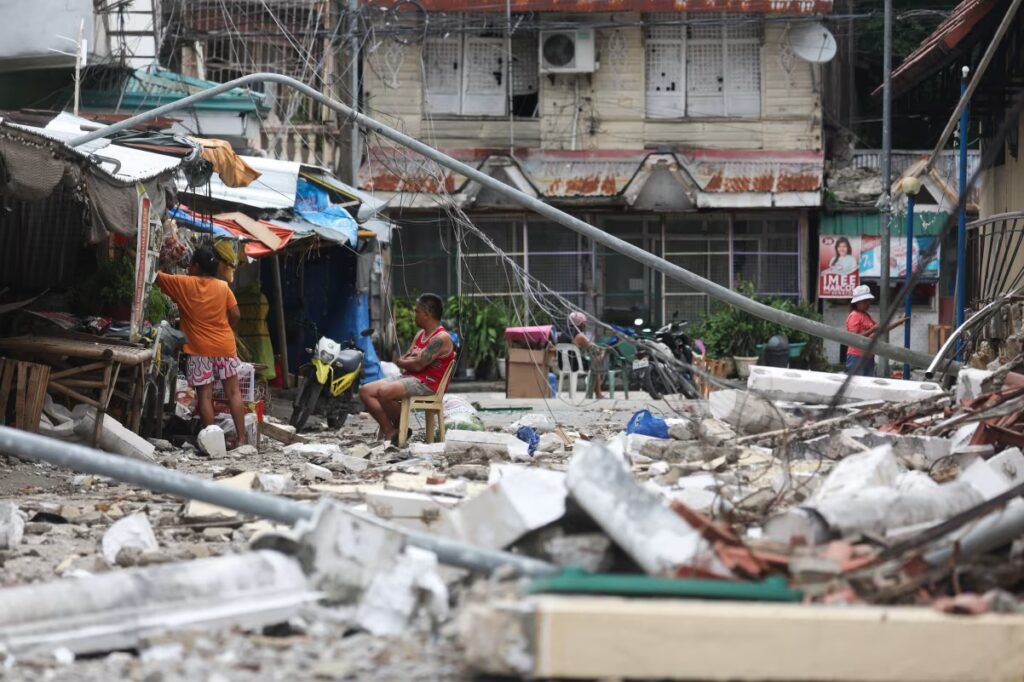
A devastating 6.9-magnitude earthquake struck northern Cebu on Tuesday at 9:59 p.m., killing at least 69 people and injuring more than 140. The quake’s epicentre was near Bogo City, about 19 kilometres northeast of Cebu, at a shallow depth of 10 kilometres.
According to the Philippine Institute of Volcanology and Seismology (Phivolcs), the shallow depth intensified the tremors, causing widespread destruction across several towns.
In San Remigio, the roof of a sports complex collapsed during a basketball game, killing at least four people. A historic century-old church in Daanbantayan crumbled to the ground, while schools, homes, and public offices in multiple towns suffered severe damage.
Authorities have declared a state of calamity in the hardest-hit areas, including San Remigio, to speed up relief and recovery operations.
More than 300 rescuers, including soldiers, police officers, and volunteers, are working with sniffer dogs and heavy machinery to reach survivors trapped under debris. However, rescue efforts are being slowed by aftershocks, with more than 600 recorded so far, including a powerful 6.0-magnitude tremor.
A tsunami alert was briefly issued for Cebu, Leyte, and Biliran provinces, but it was lifted after no unusual sea activity was observed.
President Ferdinand Marcos Jr. pledged immediate relief and directed national agencies to work closely with local governments. Power outages, damaged roads, and disrupted communication lines have complicated emergency response efforts in some towns.
Experts believe the quake may have originated from a previously unmapped fault line, raising fresh concerns about seismic risks in the region.
The earthquake comes just days after a tropical storm battered the central Philippines, leaving communities already vulnerable and now struggling with compounded hardships. Officials warn that the death toll could still rise as rescuers dig through collapsed structures in search of survivors.