Dutch Journalist’s AI Glasses Demo Ignites European Privacy Fears
AI glasses spark “RIP privacy” alarm in the Netherlands: A new era of recognition?
- A viral TV demonstration shows Dutch tech journalist Alexander Klöpping wearing AI-powered smart glasses that identify strangers’ details instantly, sparking privacy concerns.
- Amid renewed wearable-AI investment and slow-moving politics, Klöpping said his goal was to `scare the living daylights out of people` to show how easily AI and public data combine.
- Technically, the glasses surfaced personal information within seconds by combining off-the-shelf AI systems with publicly available data sources, turning any wearer into a wearer-as-surveillant and raising risks of algorithmic bias and misidentification.
- Privacy experts warn collecting biometric data without consent raises GDPR-style legal concerns, and being recorded unknowingly could chill freedom of expression and create data repositories and security risks.
- Longer term, experts fear stalkers and harassers or authoritarian regimes will misuse this tech, while ethical black market risks and centralised biometric databases invite cyberattacks.
Facebook and Meta are back investing in their once commercially failed AI glasses, hoping to get wearable, purchasable models onto shop shelves for 2027.
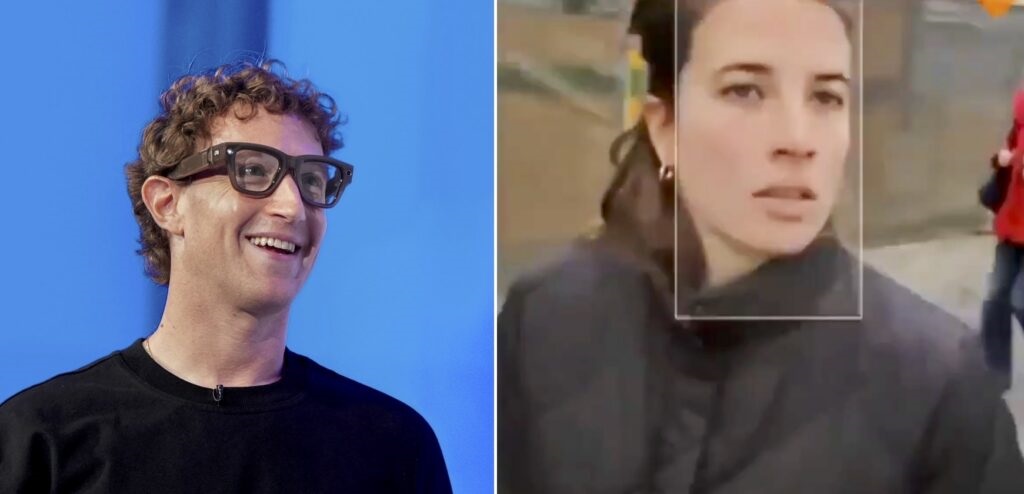
A recent viral demonstration of AI glasses by Dutch tech journalist Alexander Klöpping has sent shockwaves through the Netherlands and ignited a fierce debate about the future of privacy. Klöpping donned a pair of AI-powered smart glasses on a popular television programme, showcasing their chilling ability to instantly identify strangers on the street and retrieve their names, professions, and even LinkedIn profiles – all without the aid of government databases or police systems. The experiment has left many asking: in a world where every face can become a dataset, what remains of anonymity?
Klöpping’s unsettling display involved merely looking at passersby through the discreet eyewear. Within seconds, personal information about unwitting individuals appeared before his eyes, sourced from publicly available data and off-the-shelf AI technology. His stated intention was to “scare the living daylights out of people” and highlight the ease and invasiveness of modern facial recognition capabilities.
The double-edged sword: Pros and cons
The implications of such technology are profound, forcing a societal reckoning with the balance between innovation and fundamental rights. “To me, this marks a turning point,” observed Pascal Bornet, a prominent AI privacy expert, on X. “We’ve officially blurred the line between seeing people and knowing them. Between being in public and being exposed.”
While the immediate reaction has been one of alarm, AI-powered glasses present a complex dilemma, offering both incredible potential and formidable threats.
Potential benefits of AI glasses (The “Pros”):
- Accessibility and assistance: For individuals with visual impairments, AI glasses like those developed by Dutch startup Envision offer life-changing independence, describing surroundings, reading text, and even identifying loved ones. In healthcare, they could assist surgeons with real-time data overlays or empower field technicians with crucial information.
- Enhanced navigation and information: Imagine tourist glasses that identify landmarks and provide historical context, or professional glasses offering real-time data during complex tasks, from manufacturing to logistics.
- Security and safety (debatable): Proponents argue the tech could improve public safety by helping identify missing persons or potential threats, though this treads heavily into surveillance ethics.
- Personal productivity: Hands-free access to information, translation services, and communication could streamline daily tasks, from shopping to language learning.
Grave concerns of AI glasses (The “Cons”):
- Anonymity eradicated: The most immediate and visceral threat highlighted by Klöpping’s experiment. The ability to identify anyone, anywhere, fundamentally dismantles the concept of public anonymity, a cornerstone of liberal societies.
- Pervasive surveillance: These glasses transform every wearer into a potential covert surveillance agent. People can be recorded and identified without their knowledge or consent, leading to a chilling effect on freedom of expression and assembly.
- Privacy violations: The collection and processing of biometric data (facial scans) and other personal information (names, affiliations) without explicit consent is a direct violation of fundamental privacy rights, particularly under stringent regulations like the GDPR in Europe.
- Data security risks: The vast amounts of highly personal data captured by these devices must be stored and processed. Centralising such sensitive information creates massive targets for cyberattacks and data breaches, with potentially catastrophic consequences for individuals whose data is compromised.
- Ethical black market: As Bornet mentions, “You can ban it, regulate it, add blinking red lights… but once tech like this exists, someone will always find a way to use it.” This raises the spectre of illicit use by stalkers, harassers, or even authoritarian regimes seeking to track dissidents.
- Algorithmic bias and discrimination: Facial recognition technology is notorious for biases, particularly against certain racial groups, leading to misidentification, false accusations, and exacerbating existing societal inequalities.
Bornet’s stark closing question nails the challenge ahead: “When every face becomes a dataset, how do we protect the meaning of being human?” The Dutch experiment serves as a powerful wake-up call, urging lawmakers, technologists, and citizens to confront the profound ethical, legal, and societal implications before the line between observing and knowing is irrevocably blurred. The debate on how to regulate or even restrict such potent technology is just beginning.
Even if not knowingly used for nefarious purposes, could this technology be used by third parties to track the constant whereabouts of individuals? The trouble is that politics and legislation takes longer than tech to catch up.