Cows painted with zebra stripes win scientists’ parody Nobel Prize
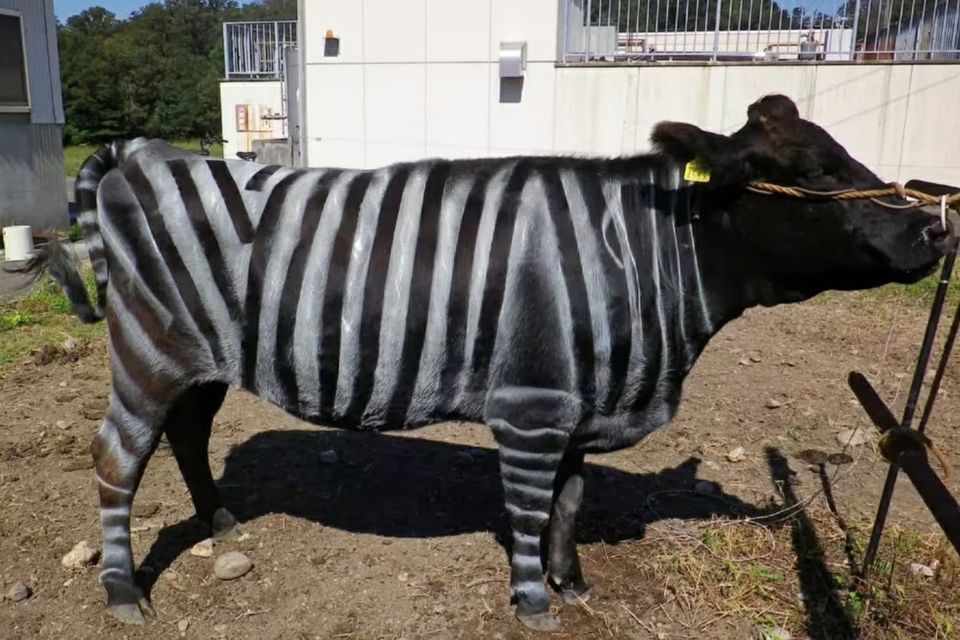
Japanese scientists who painted cows with zebra stripes to keep flies at bay have been awarded a parody Nobel Prize.
The 11 researchers from Kyoto University and the Aichi Agricultural Research Centre were recognised at the Ig Nobel Prize ceremony in Boston, Massachusetts, on Thursday.
The prizes honour unusual scientific achievements that “first make people laugh, and then make them think”.
The Japanese scientists conducted experiments to determine if painting white stripes on cows’ legs and flanks affected the number of flies that landed and bit the animals.
Researchers counted the times the cattle flicked their tails, shook their heads or stamped their hooves − all seen as efforts to dislodge and dissuade flies.
They discovered that cattle that had been given stripes were bitten approximately 50pc less frequently than the rest of the herd.
Painting cows could be an alternative to using pesticides to keep cattle free of insects, the paper noted.
Scientists say they do not yet know why flies are less attracted to striped animals. The idea has nevertheless been put into practice in Yamagata prefecture, an area famous for some of the best wagyu beef in the world.
The Japanese black breed is one of four breeds of cattle that produce high-end wagyu, but farmers have long complained that herds were vulnerable to blood-sucking insects, such as cattle flies and gadflies.
This elevated the stress levels of cattle, they said, with the discomfort and pain even impacting the herds’ reproductive rates.
“Many farmers have hesitated to release their cattle on farmland because they feel sorry for the animals being targeted by gadflies,” an official of the prefecture’s agricultural promotion section told the Mainichi newspaper.
“But we can now expect cattle to relax and grow healthily if we give them stripes.”
One farmer commented that the improvement in the cattle was “plain to see”, adding that he was also happy to see that the unpainted livestock had not turned their backs on their striped colleagues. The award marks the 19th consecutive year in which a Japanese team has been recognised with an Ig Nobel.
Other bizarre experiments celebrated at this year’s awards include testing which types of pizza lizards prefer to eat, and examining whether foul-smelling shoes impact a person’s experience using a shoe rack.
Another researcher was recognised posthumously for 35 years studying the growth of fingernails.
Researchers from Colombia picked up an award for testing the theory that alcohol impairs bats’ ability to fly.
The researchers said the bats did get drunk, adding that the mammals’ flying abilities and echo location skills were significantly impaired. (© Telegraph Group Media Holdings Ltd)