Africa’s largest hydropower facility: What rest of Africa thinks of Ethiopia’s grand dam
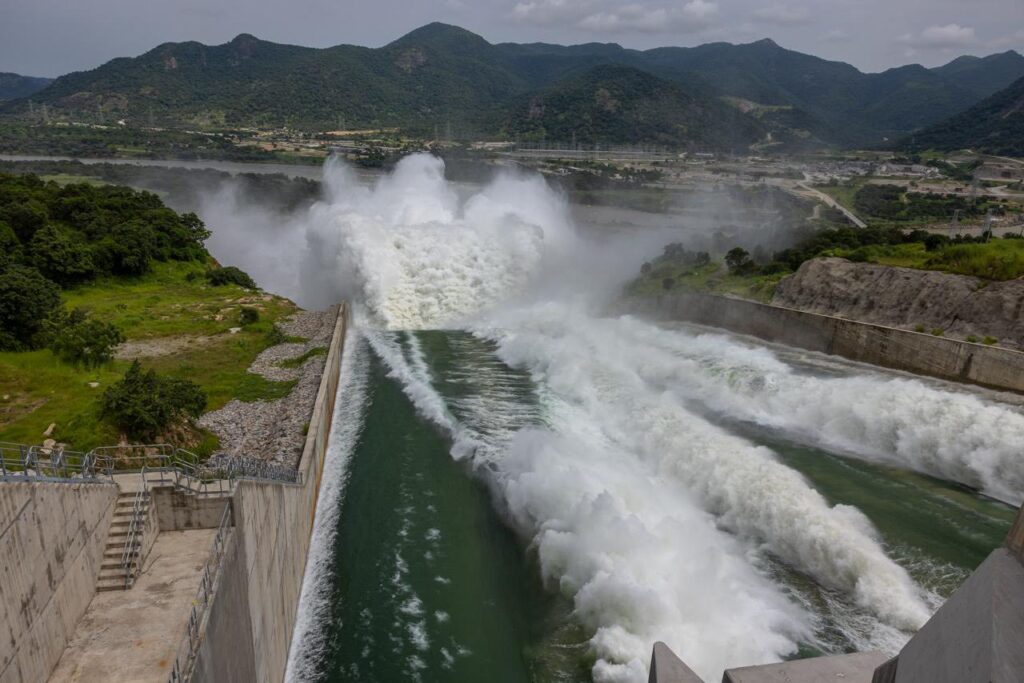
History was made on Tuesday when a collective of African leaders and representatives from the diaspora witnessed the grand launching of the $5 billion Grand Ethiopian Renaissance Dam (GERD), among the world’s top 20 largest dam of its kind.
It is by and large hailed as a bold genius, a monumental marvel of steel, concrete and water, which took fourteen years to build, becoming the continent’s biggest hydropower facility which stands at 145 meters high and 2 kilometres in length towering over the Blue Nile.
Aside from doubling Ethiopia’s current electricity supply to at least 5 million homes nationally, it is also envisaged as an energy game-changer for the Horn of Africa whose industrial development would benefit exponentially from the dam.
GERD holds 74 billion cubic meter of water and 5,150-megawatt generating capacity.
Some 60 million Ethiopians are without electricity, with many industries operating at reduced capacity due to inconsistent power supply.
GERD was built to directly plug this huge energy deficit undermining Ethiopia’s national development.
The projected output of over 5,000 megawatts is expected to alleviate production constraints, allowing for increased efficiency. This stable electricity supply will serve as a magnet for both local and foreign investment, fostering manufacturing sectors, agro-processing industries, and technology hubs.
A groundswell of African opinion has been celebrating the ”engineering feat” as ”not just water and concrete but the symbol of unity, sacrifice, and the dream of generations which is a proud historic moment to witness”.
Cognisant of the immense benefit for the region, Kenyan President William Ruto who has strong ties with Ethiopian Prime Minister Abiy Ahmad, was the first to praise the dam, describing it as a bold affirmation of Africa’s ability to marshal its own resources and shape its destiny.
He however warned that while reveling in such triumph, Nile nations should be mindful of differing positions about the use of resources from the world’s longest river and reaffirmed Kenya’s support for equitable use of shared waters, urging Ethiopia, Egypt, and Sudan to continue pursuing trilateral talks in good faith.
Cairo and Khartoum have not hidden their misgivings about a dam on the Blue Nile compromising their water security, fears which Addis Ababa had dismissed as misguided and overly exaggerated. Ethiopian Prime Minister Ahmad in his speech inaugurating the dam reassured the dam’s critics that his country’s ambition would complement socio-economic development in the region and beyond.
Other leaders who attended the launching seem to share this faith.
South Sudan’s President Salva Kiir said the dam was much more than a national treasure for Ethiopia, meaning that it is a regional edifice, the gains of which would spread to the whole of East Africa.
“The progress of one nation is the progress of all” he added.
Even President Sheikh Hassan Mohamud of Somalia, whose relations with Ethiopia had been rocked in recent years, chimed in positively about Gerd being an added foundation for what he called shared resources and brotherhood, admonishing that no nation should feel excluded or allowed to bear the burden of development alone.
Djiboutian leader Ismail Omar Guelleh said the inauguration of Gerd would live in the annals of African development history as a great victory which fills Africans with immense pride.