
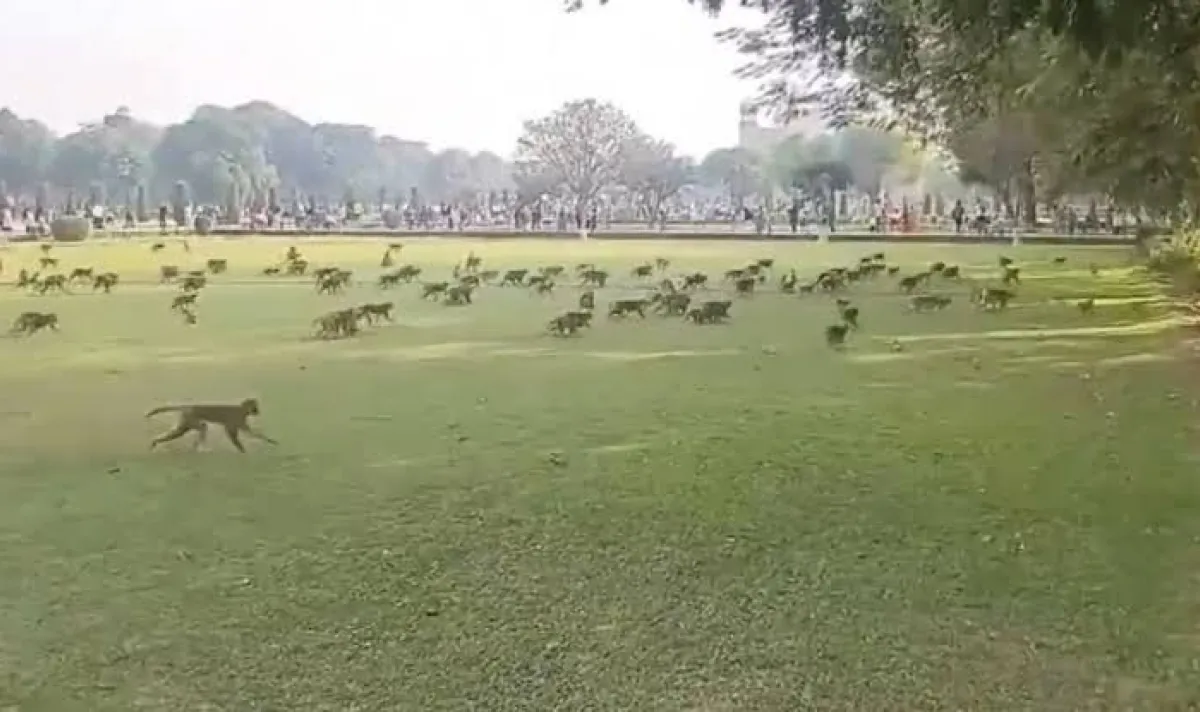
Groups of monkeys have taken over the areas around the East, West and Royal Gates of the Taj Mahal in the Indian city of Agra. Video footage released on November 26 shows the animals roaming freely in the complex and around areas frequented by tourists.
NDTV described the situation as a growing risk to visitors. “The footage shows groups of monkeys roaming the iconic monument, with tourists facing the risk of attacks,” the channel said. According to the media outlet, attempts by authorities to chase away or capture the animals have so far failed to solve the problem.
The concerns are not based solely on the presence of the monkeys. In September, two tourists were bitten during their visit and received medical attention. NDTV described them as foreign visitors, naming an 83-year-old tourist from Brazil and a man from West Bengal. India Today said the second tourist was from the Indian state of West Bengal


Free website development and hosting from the hosting company of fakti.bg since 2011.

Monkeys take over the entrances to the Taj Mahal
November 27, 2026 05:091,2594
Groups of animals have been filmed near the monument’s East, West and Royal Gates. Repeated attacks on tourists have once again raised questions about safety at the complex


Groups of monkeys have taken over the areas around the East, West and Royal Gates of the Taj Mahal in the Indian city of Agra. Video footage released on November 26 shows the animals roaming freely in the complex and around areas frequented by tourists.
The concerns are not based solely on the presence of the monkeys. In September, two tourists were bitten during their visit and received medical attention. NDTV described them as foreign visitors, naming an 83-year-old tourist from Brazil and a man from West Bengal. India Today said the second tourist was from the Indian state of West Bengal.
A series of attacks in recent months
The incidents are part of a series of incidents around the Taj Mahal. On July 26, a South Korean tourist was bitten near the East Gate. She received first aid at the monument’s health center, but an ambulance did not arrive for nearly an hour. The victim had to be taken to a private hospital in an electric vehicle.
“There was a delay in the arrival of the ambulance after the alert was given,” an official from the Archaeological Survey of India told the Hindustan Times. The department has since sent a letter to the chief medical officer of Agra.
In August, a monkey bit a visitor from Karnataka near the West Gate, and a six-year-old child from Haryana was attacked near the Mehman Khana. On September 3, a tourist from Delhi was bitten near the mosque in the complex. On September 16, a British tourist was injured near the King’s Gate. India Today reported at the time that this was the fourth recorded case of an attack on a tourist in about 15 days.
The problem is not new.
The presence of monkeys at the complex also drew attention in June, when a video showed the animals jumping into a fountain, splashing in the water and chasing each other. At the time, the footage was largely dismissed as a curiosity, but subsequent attacks have drawn attention to the more serious issue of animal control and emergency response.
According to India Today, the capture of the monkeys is linked to the Agra Municipal Corporation, while the Archaeological Survey of India is responsible for the safety and services of visitors at the monument itself. The division of responsibilities between the institutions, as well as the lack of a permanent solution, continue to make it difficult to control the problem.
The Taj Mahal is a UNESCO World Heritage Site and attracts millions of tourists every year. The new footage raises questions not only about the safety of visitors but also about the preparedness of authorities to respond to another incident.