Moldova’s pro-EU party wins parliamentary poll
Moldova’s ruling pro-EU party won parliamentary elections with the backing of more than half of voters, according to near-complete results yesterday for polls overshadowed by accusations of Russian interference in the ex-Soviet nation.
The small EU candidate nation, which borders Ukraine and has a pro-Russia breakaway region, has long been divided over whether to move closer with Brussels or maintain Soviet-era relations with Moscow.
Sunday’s elections were seen as crucial for the country to maintain its push toward EU integration, launched after Moscow’s 2022 invasion of Ukraine.
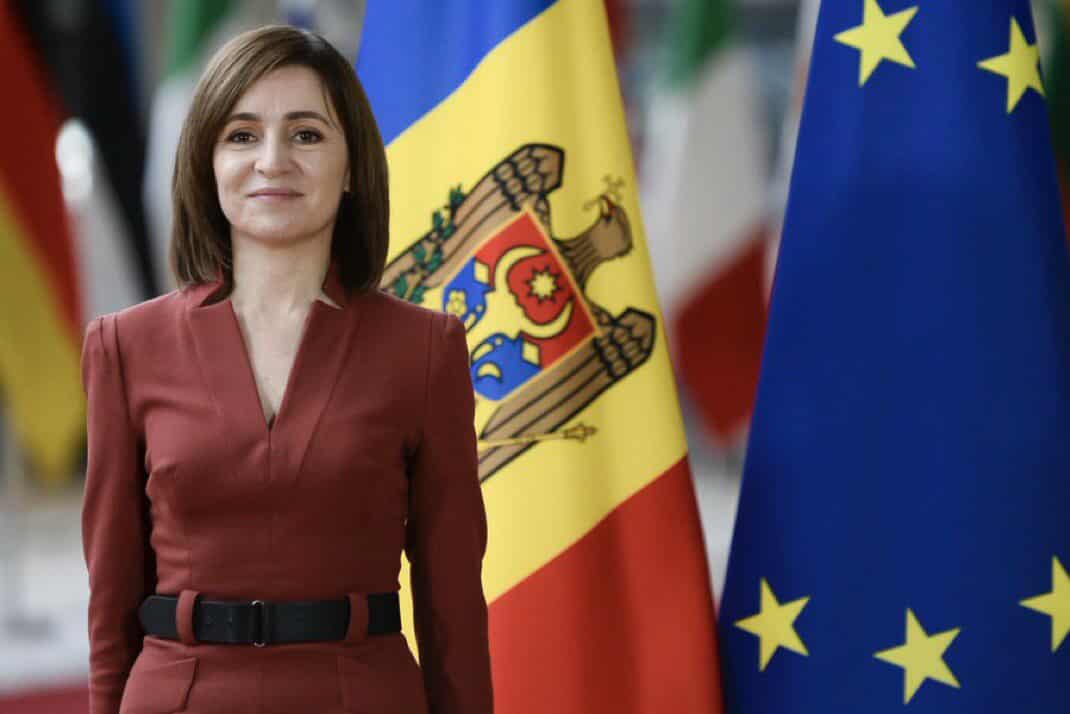
With more than 99.5 percent of ballots counted, the Party of Action and Solidarity (PAS) headed by Moldovan President Maia Sandu had garnered 50.03 percent of the vote to elect members of the 101-seat parliament.
That compared with 24.26 percent for the pro-Russian Patriotic Bloc, according to results published on the election commission’s Web site.
The support for the PAS — whose leaders did not address waiting reporters late on Sunday — was slightly lower than the 52.8 percent that it won in 2021.
“Statistically speaking PAS has guaranteed a fragile majority,” analyst Andrei Curararu of the Chisinau-based think tank WatchDog.md said on Sunday as the party took the lead in the count, but he warned that “danger” had not passed, “as a functional government is difficult to form.”
“The Kremlin has bankrolled too big of an operation to stand down and could resort to protests, bribing PAS MPs and other tactics to disrupt forming a stable pro-European government,” he said.
The ballot was overshadowed by fears of vote-buying and unrest, as well as “an unprecedented campaign of disinformation” from Russia, according to the EU.
Moscow has denied the allegations.
Former Moldovan president Igor Dodon, one of the leaders of the Patriotic Bloc, yesterday called on people to “peacefully protest,” accusing the PAS of stealing the vote.
“If during the night there are falsifications, tomorrow we won’t recognize [the result of] the parliamentary elections … and we will ask for elections to be repeated,” he said late on Sunday outside the electoral commission, where he went with some supporters.
Earlier on Sunday, voter Natalia Sandu said the election was “important because we’re at a crossroads.”
“Our hope, and our expectation, is that we will stay on the European path,” the 34-year-old homemaker said.
“The alternative is unthinkable, I refuse to even imagine sliding back into the past,” she said.
Turnout stood at about 52 percent, similar to that of the last parliamentary elections in 2021.
Voters in the nation of 2.4 million — one of Europe’s poorest — have expressed frustration over economic hardship, as well as skepticism over the drive to join the EU.
“I want higher wages and pensions… I want things to continue as they were during the Russian times,” Vasile, a 51-year-old locksmith and welder, who only gave his first name, said at a polling station in Chisinau.
About 20 political parties and independent candidates ran for the 101 parliamentary seats.
After casting her vote, Maia Sandu warned of the “massive interference of Russia.”
Moldova’s cybersecurity service said it had detected several attempted attacks on electoral infrastructure, which were “neutralized in real time … without affecting the availability or integrity of electoral services.”
In the breakaway region of Transnistria, authorities, in turn, accused Chisinau of “numerous and blatant” attempts to limit the vote of Moldovans living in the separatist territory by reducing the number of polling stations and other tactics.
The government has accused the Kremlin of spending hundreds of millions of “dirty money” to interfere in the campaign.
In the buildup to the vote, prosecutors carried out hundreds of searches related to what the government said was “electoral corruption” and “destabilization attempts,” with dozens arrested.